
 Image 1 of 4
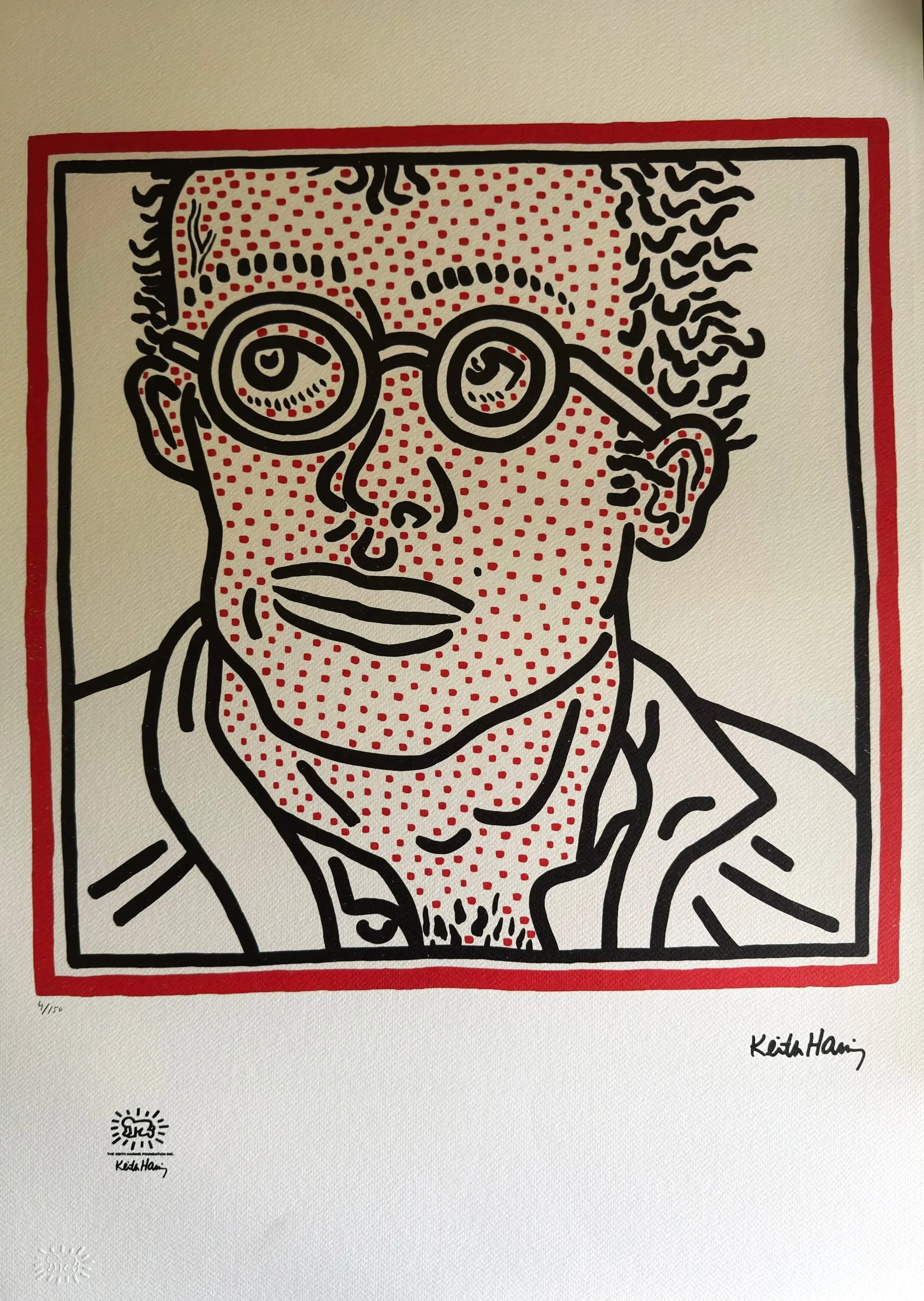 Image 2 of 4
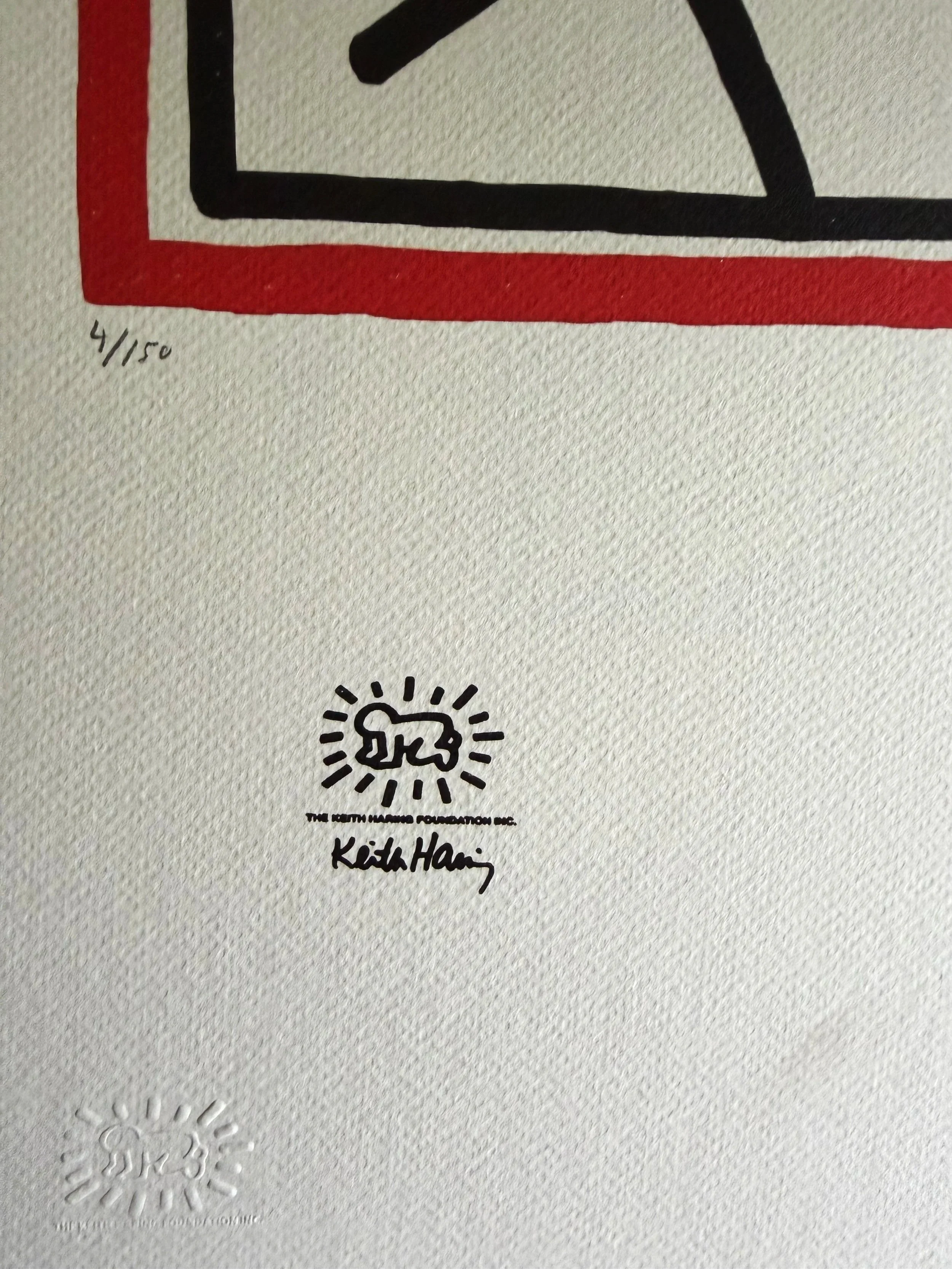 Image 3 of 4
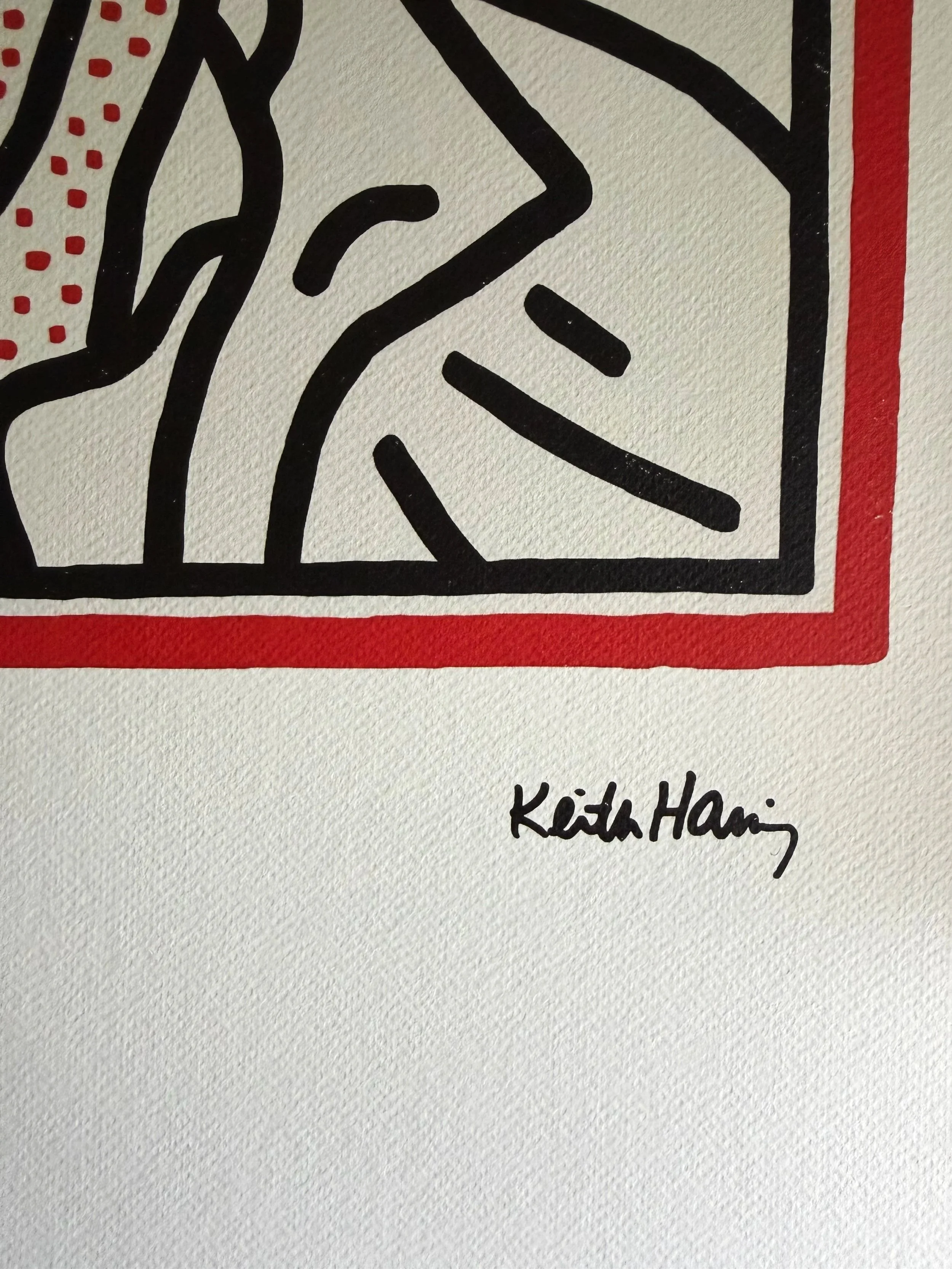 Image 4 of 4
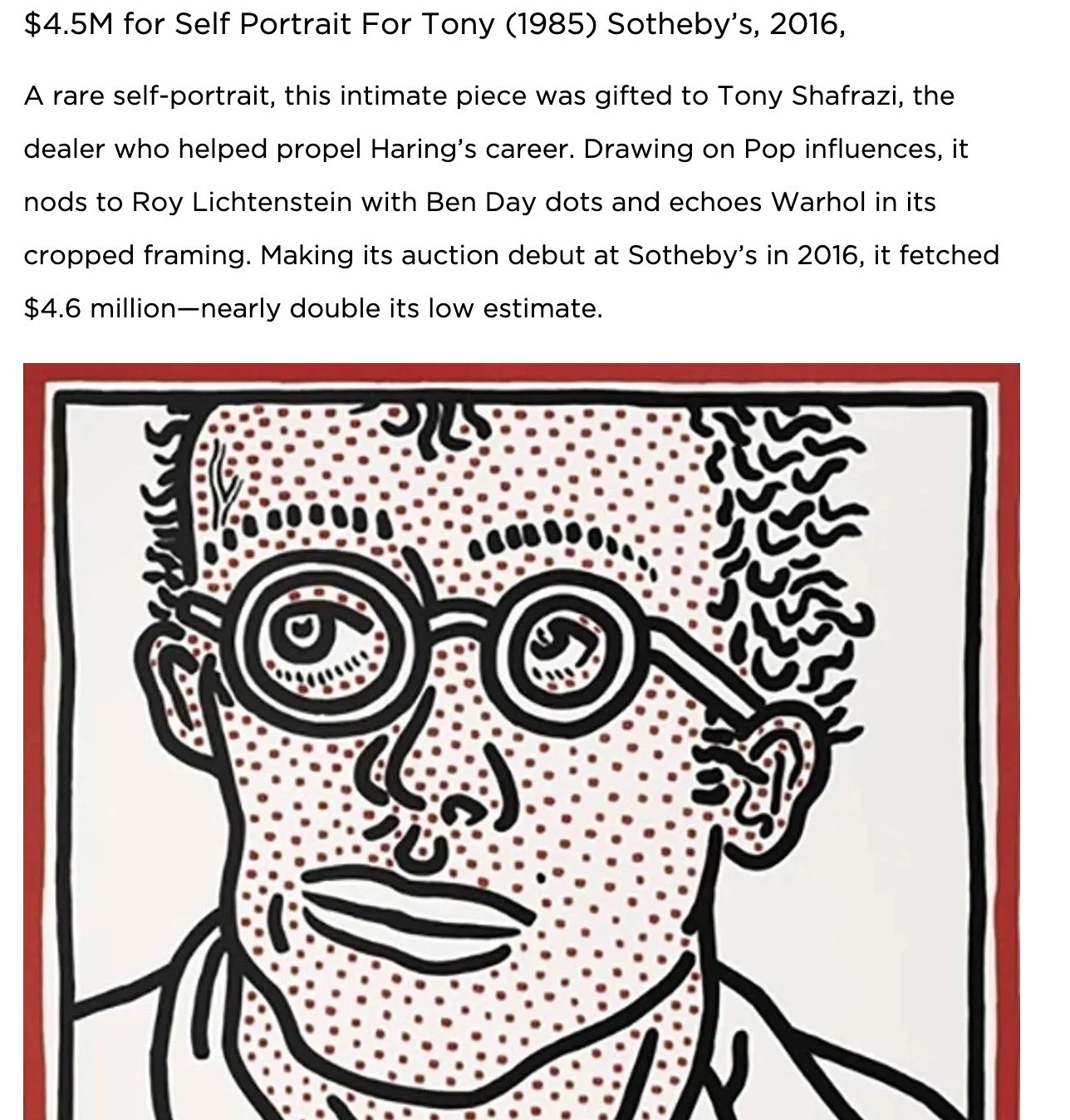
Self-Portrait For Tony, 1985
Now, here’s something that truly didn’t happen a lot – Keith Haring painting himself. A unique opportunity for self-reflection, this artwork is, you guess, one dedicated to gallerist Tony Shafrazi, and it represents a celebration of the artist’s foray into the practice of painting on canvas. Calling to mind the close-up portraits of Andy Warhol and the pop style of Roy Lichtenstein, Self-Portrait For Tony uses a simple palette of red and black against a pure white background. It is simplistic, yet utterly complex and revealing.
This Keith Haring artwork sold at Sotheby’s New York in 2016 for $4,512,500.
The Intimate Turn: A Rare Glimpse of the Self
While Keith Haring’s oeuvre is largely defined by universal symbols, Self-Portrait For Tony represents a rare and deeply personal departure. Created in 1985 at a pivotal moment in his career, this work sees Haring stripping away his iconic lexicon—the "Radiant Baby" and "Barking Dog"—to turn the lens toward himself. It is a moment of profound self-reflection, proving that beneath the social activism lay a painter with a masterful capacity for psychological depth.
The Shafrazi Connection: Architect of a Legacy
The title is a direct homage to legendary gallerist Tony Shafrazi, Haring’s most trusted confidant and the visionary who first introduced his subway drawings to the high-art world in 1982. This portrait celebrates their symbiotic relationship; as Shafrazi fought to establish Haring’s commercial and institutional presence, Haring gifted him this sensitive likeness. It stands as a testament to the era-defining partnership that transformed 1980s downtown New York culture into a global phenomenon.
Stylistic Dialogue: Warhol & Lichtenstein
Stylistically, this work serves as an intellectual bridge between the giants of Pop Art. Haring adopts the tight, psychological "close-up" framing of Andy Warhol’s self-portraits while honoring Roy Lichtenstein’s mechanical "Ben-Day" dots through his own handcrafted precision. The vibrant red spots and sharp black contours create a rare anatomical realism—capturing specific details like the vein on his temple—within his signature economy of line.
The Weight of 1985: Between Celebrity and Mortality
The year 1985 was a defining axis for Haring, marked by major exhibitions at the Leo Castelli and Tony Shafrazi galleries. However, beneath this meteoric rise was a darkening awareness of the AIDS crisis beginning to devastate his community. This self-portrait exists in that tension; it is at once a celebration of artistic triumph and a vulnerable, honest encounter with his own mortality.
Technical Authentication & Provenance
Edition Details: Released in 1990 under the strict supervision of the Keith Haring Foundation, this work remains a poignant final chapter in the artist’s legacy.
Authentication Marks: The piece is plate-signed by Keith Haring and bears the official Keith Haring Foundation estate stamp.
Security Features: For ultimate authentication, the work includes an official blind-stamp (embossed logo) and is strictly pencil-numbered (4/150) by the Foundation.
Institutional Context: Keith Haring’s works are held in the permanent collections of major institutions, including MoMA and the Whitney Museum, ensuring its enduring collection value and market stability.