

 Image 1 of 4
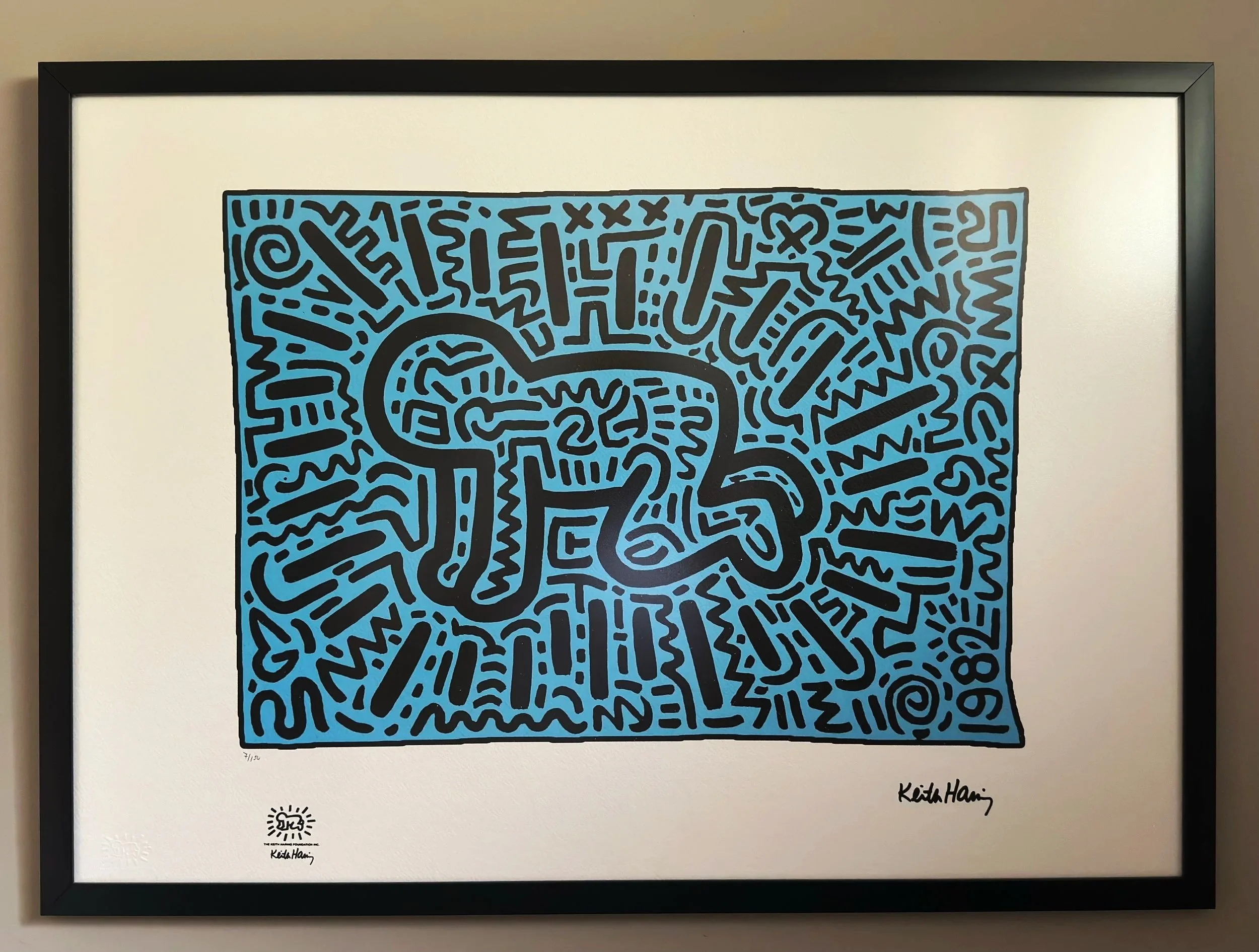 Image 2 of 4
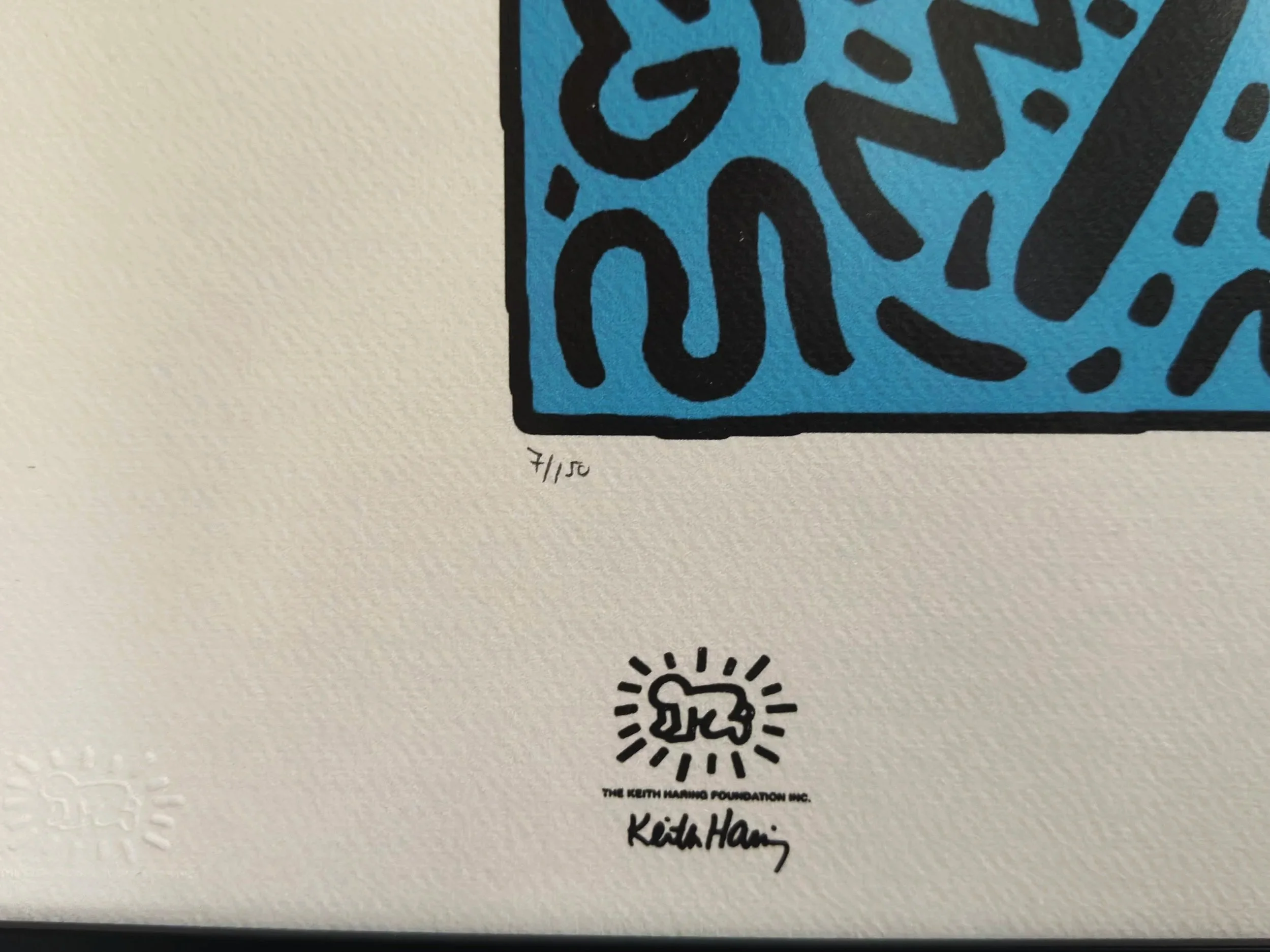 Image 3 of 4
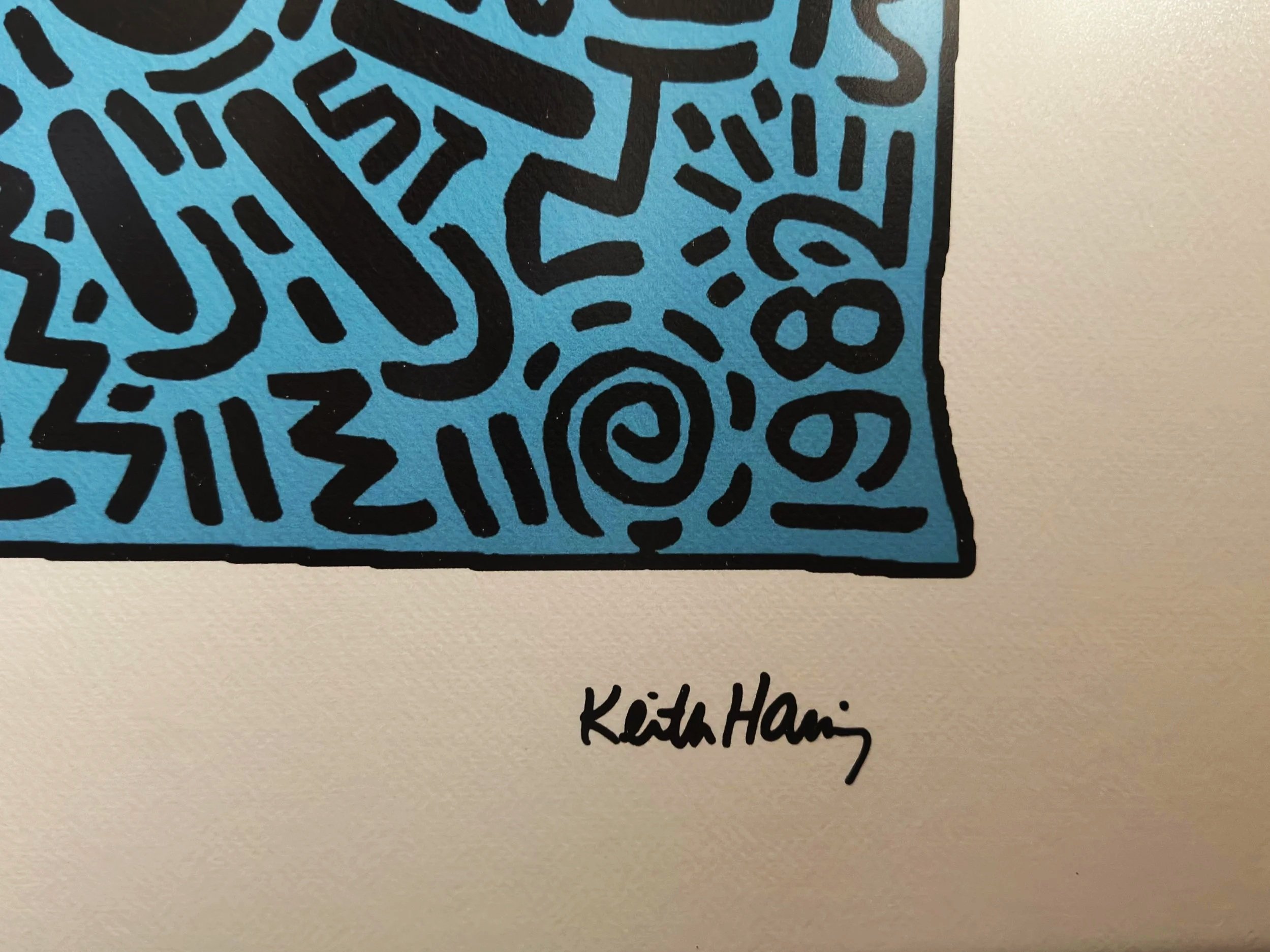 Image 4 of 4
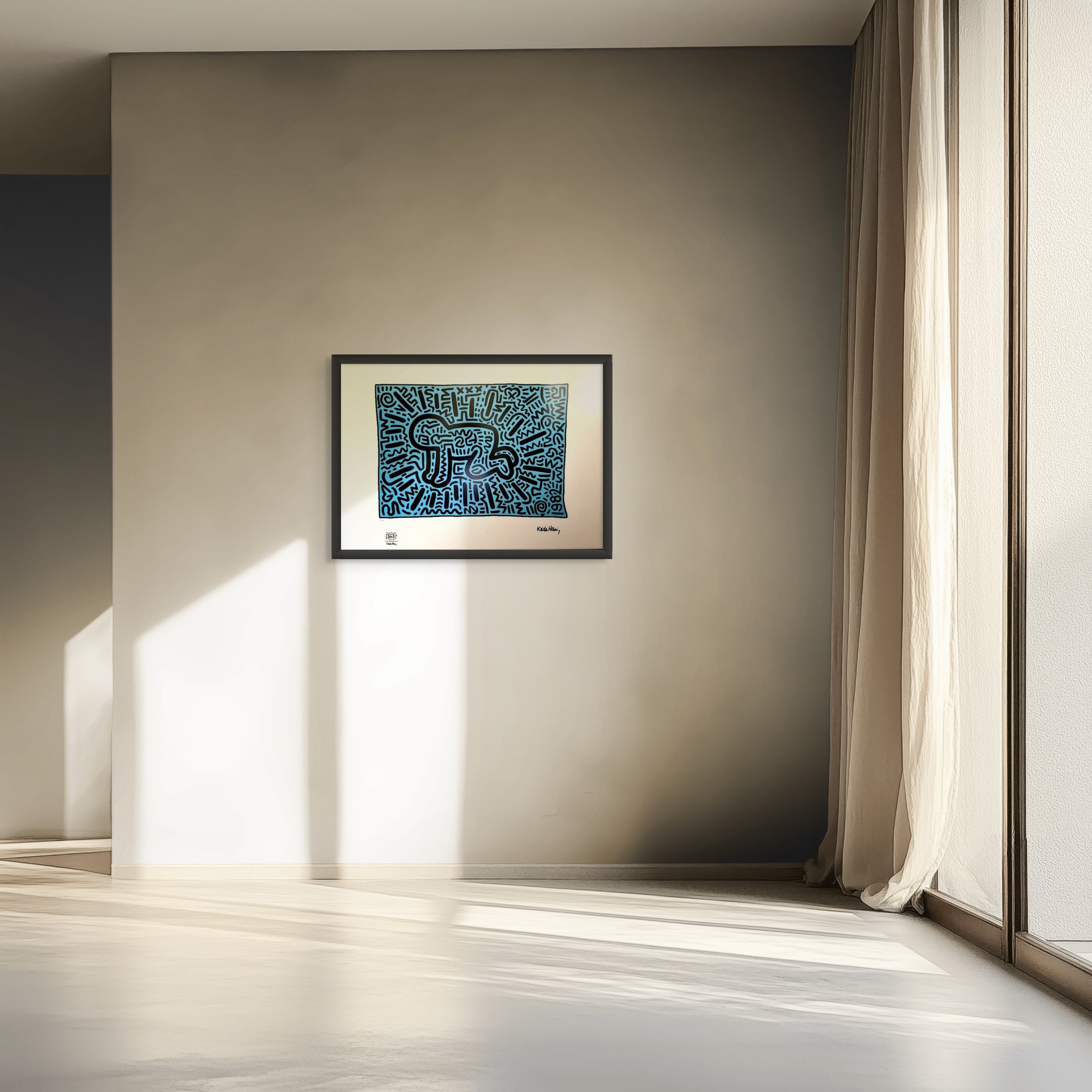
The "Radiant Baby" is the most significant and celebrated symbol in Keith Haring’s visual lexicon. Originally conceived in 1982 during his legendary subway drawing period, this icon represents purity, innocence, and the boundless potential of the future. While much of Haring’s work dealt with complex social themes, the Baby remained his most optimistic signature—a "universal tag" that transcended language barriers and social classes.
This specific 1982 design, rendered against a striking cerulean blue background, captures the frenetic energy of New York City’s 1980s art scene. The baby is surrounded by a dense field of "Haring lines"—patterns of movement, television static, and urban rhythm—that signify the electric life force of the modern age. It is not just a figure; it is a radiant light source, representing the human spirit’s resilience in a chaotic, technologically-driven world.
Symbology & Anatomy
The "Radiant Baby" is a masterpiece of minimalist storytelling and a testament to Haring’s belief in art as a democratic force. The crawling infant, depicted with thick, confident outlines, serves as a secular version of a religious icon. The rays emanating from the body—the "radiance"—signify spiritual energy, vitality, and goodness. Haring himself stated that babies represent the purest form of human existence, free from the prejudices and complexities of adulthood.
In this large-scale 1982 composition, the background is filled with a horror-vacui style pattern of swirls, dots, and zig-zags. These markings are the "DNA" of Haring’s street style, creating a vibrating atmosphere that pushes the central figure forward. The inclusion of the year "1982" within the matrix is a historical marker, documenting the exact year Haring transitioned from an underground phenomenon to a global art superstar.
Highlights
The Ultimate Icon: The Radiant Baby is the most recognized and sought-after asset in the Haring market, serving as a definitive cornerstone for any blue-chip contemporary collection.
Exceptional Rarity: Being number 7 of 150, this is one of the earliest pulls from the 1990 Estate series. Early pulls are highly coveted for their superior print crispness and archival proximity to the original publication intent.
Genesis Period: The 1982 design represents the "Genesis" of Haring's career. Works from this specific year are considered the foundation of his artistic legacy and carry significant historical weight.
Archival Authority: Backed by both the official Keith Haring Foundation Estate Stamp and the holographic security system, this piece offers the highest level of provenance and archival security.
Institutional Presence: The Radiant Baby motif is a permanent fixture in major institutions worldwide; owning this verified edition places a private collection in alignment with international museum standards.