

 Image 1 of 6
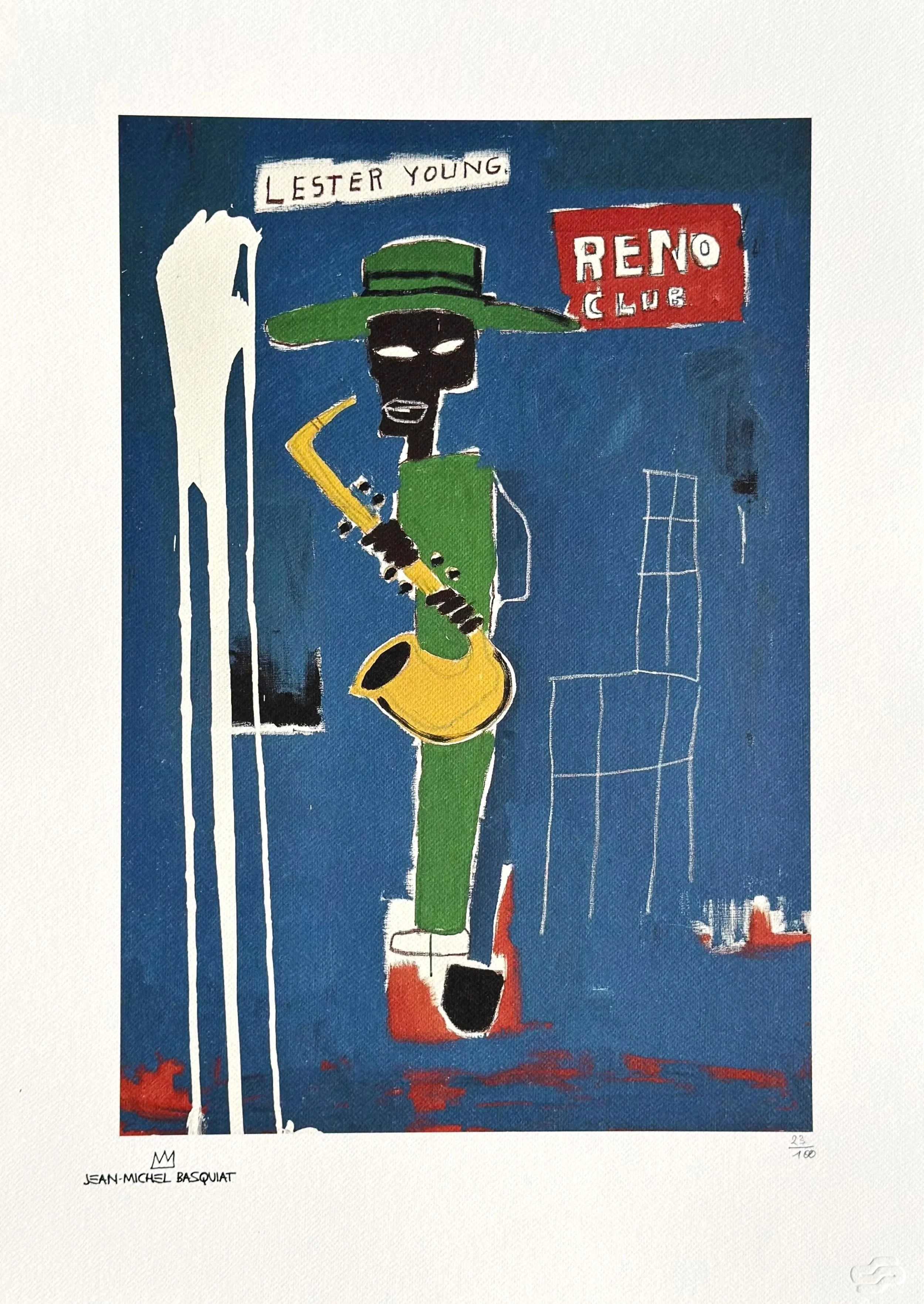 Image 2 of 6
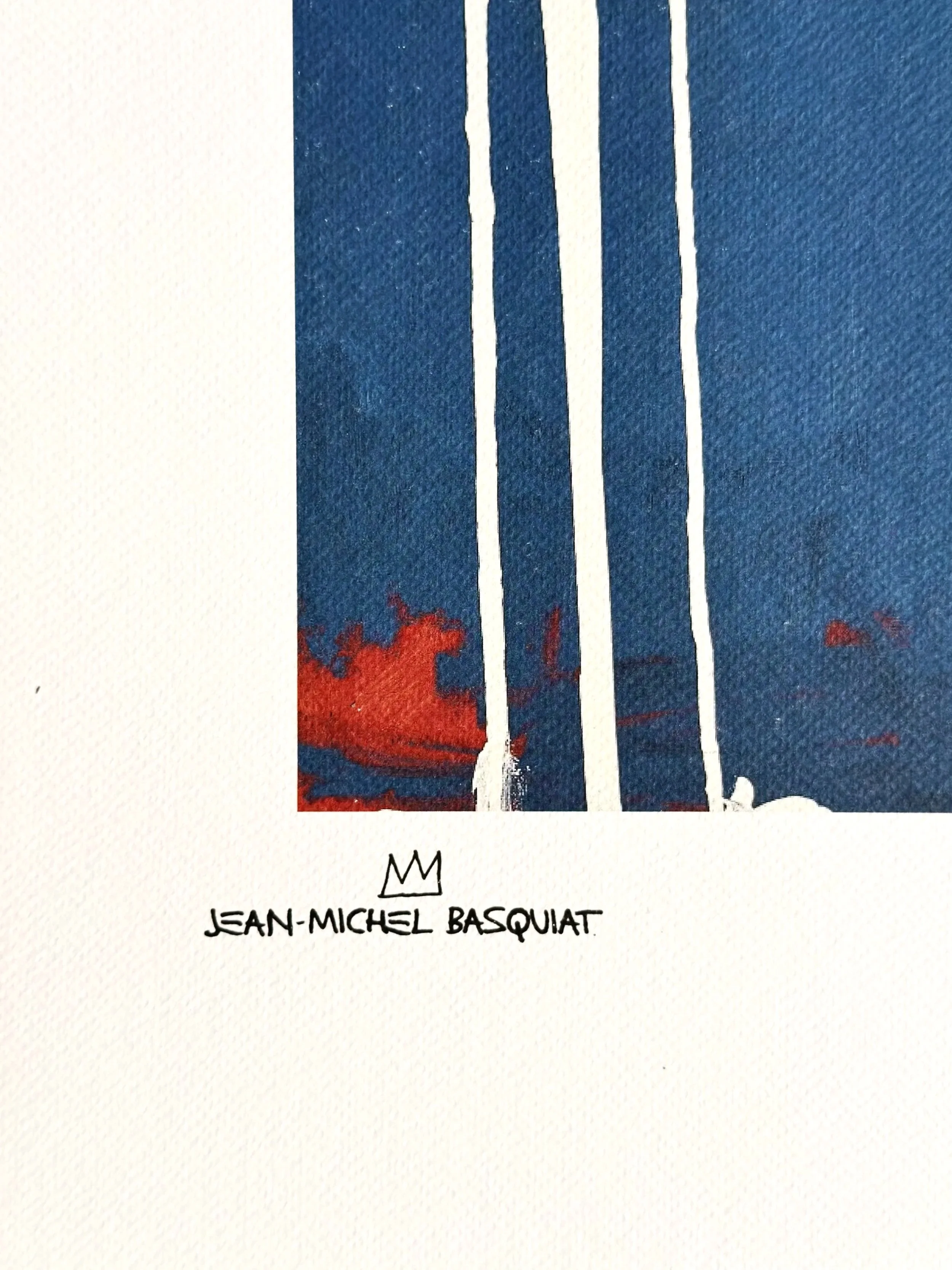 Image 3 of 6
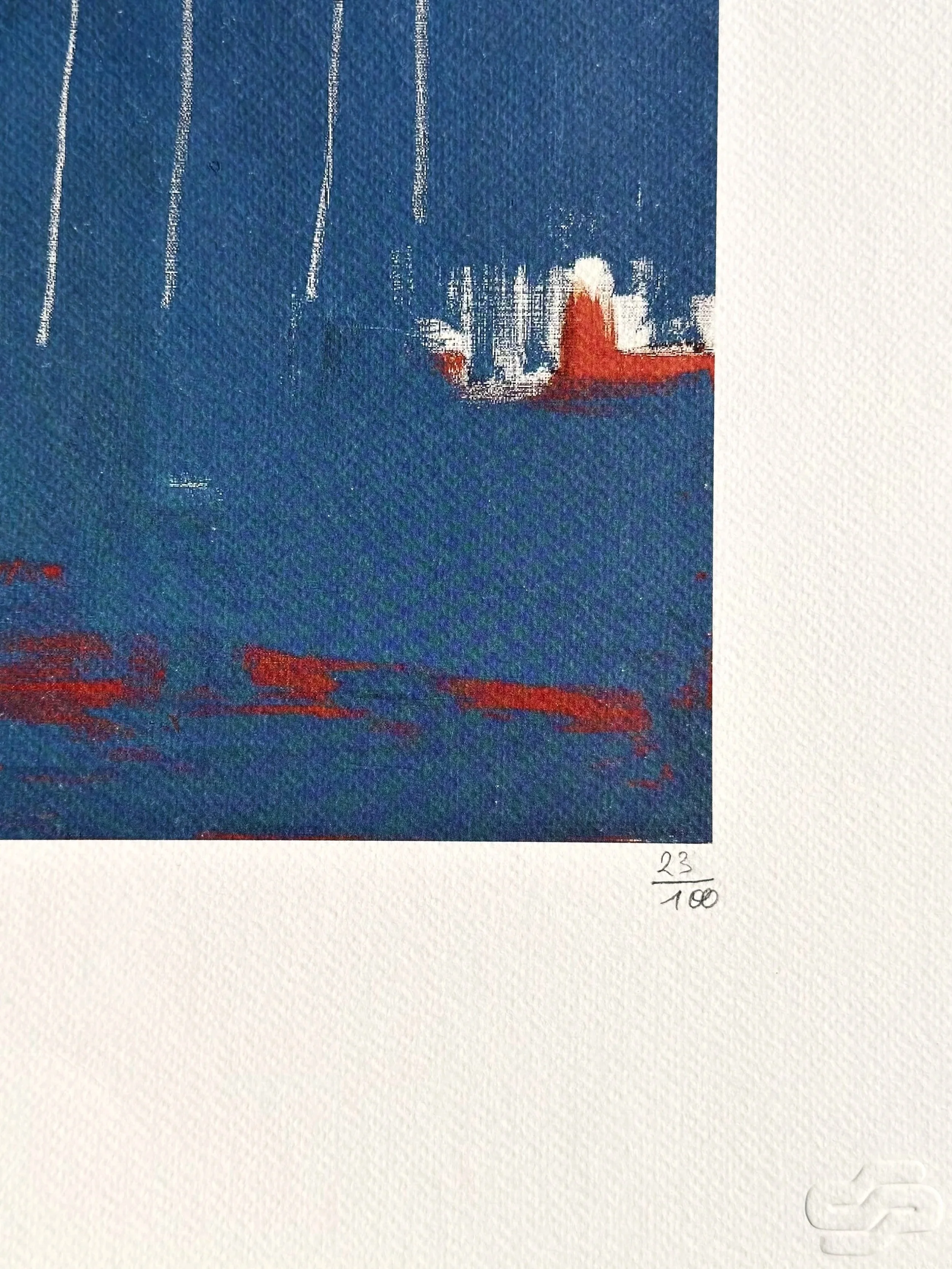 Image 4 of 6
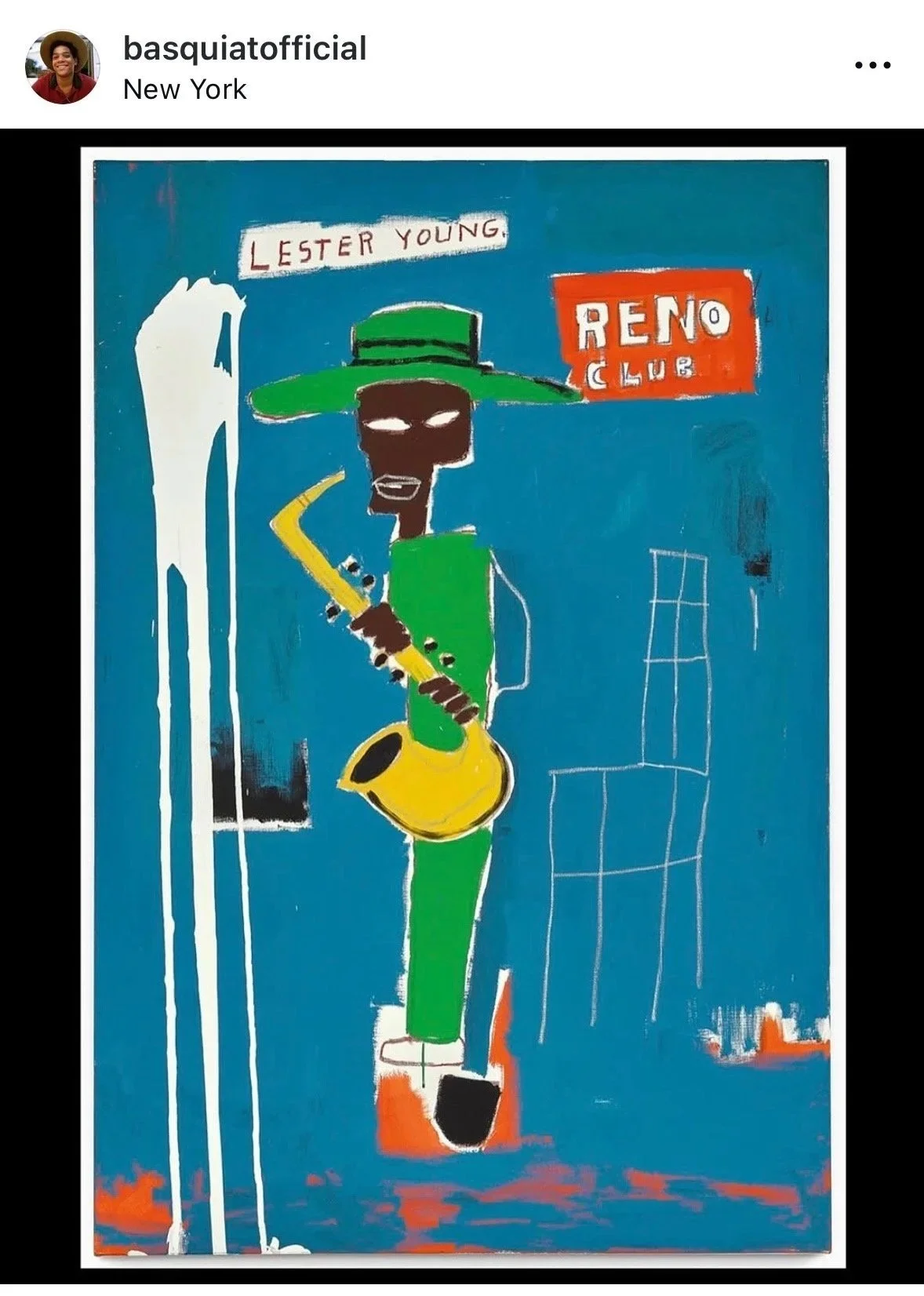 Image 5 of 6
 Image 6 of 6

Painted in the crucial moment of 1986, just two years before his untimely death, Jean-Michel Basquiat’s In the Wings is undoubtedly one of the most charismatic cultural portraits of his entire oeuvre. Adding to the limited number of important works dedicated to the greatest jazz legends—such as his 1983 masterpiece Horn Players—Basquiat here enshrines the image of Lester Young, arguably the most influential saxophonist of all time, creating a highly personal, devotional icon for posterity.
Theoretical and Stylistic Analysis
As noted by Fred Braithwaite (Fab 5 Freddy), Basquiat possessed a unique genius for incorporating song titles and liner notes into his visual language, blending them seamlessly with his distinct style. According to Robert Farris Thompson, In the Wings represents a sophisticated dialogue with Basquiat’s predecessors: it fuses the gestural drips of Jackson Pollock, the lyrical linework of Cy Twombly, and the pop-culture multiplicity of Andy Warhol. The visceral cascade of white paint down the left edge serves as a synesthetic evocation of the free-flowing, improvisational sound of radical jazz.
Lester Young and the "Reno Club" Context
Basquiat highlights Young’s signature unorthodox style—positioning his saxophone at a nearly horizontal angle—contrasting the luminous yellow of the instrument against a brilliant blue backdrop. Dressed in a dandyish green suit and wide-brimmed hat, the musician is spot-lit at center stage. The inclusion of the "Reno Club" refers to the legendary 1936 live recordings in Kansas City, which served as an inspirational score for Basquiat’s vision. As Bell Hooks observed, Basquiat revered these jazz pioneers as "creative father figures," immortalizing their innovative power.
Race and Representation
The highly stylized treatment of Young’s face—composed of rich mahogany brown with provocative, primary inscriptions—recalled both the influence of African art on modern masters like Picasso and the unsettling aesthetics of historical minstrelsy. Cultural theorist Dick Hebdige surmised that by "peeling the skin back to the bone," Basquiat uncovered the history of the Black American male’s construction. Through In the Wings, Basquiat destabilizes the cultural canon, inserting Black consciousness at its forefront and positioning himself as its visionary narrator.
Printed by master printer Rupert Jasen Smith on Lenox Museum Board, this 23/100 edition captures the vibrant energy, the two-dimensional aesthetic, and the raw brushwork of the 1986 original with museum-grade fidelity.