

 Image 1 of 5
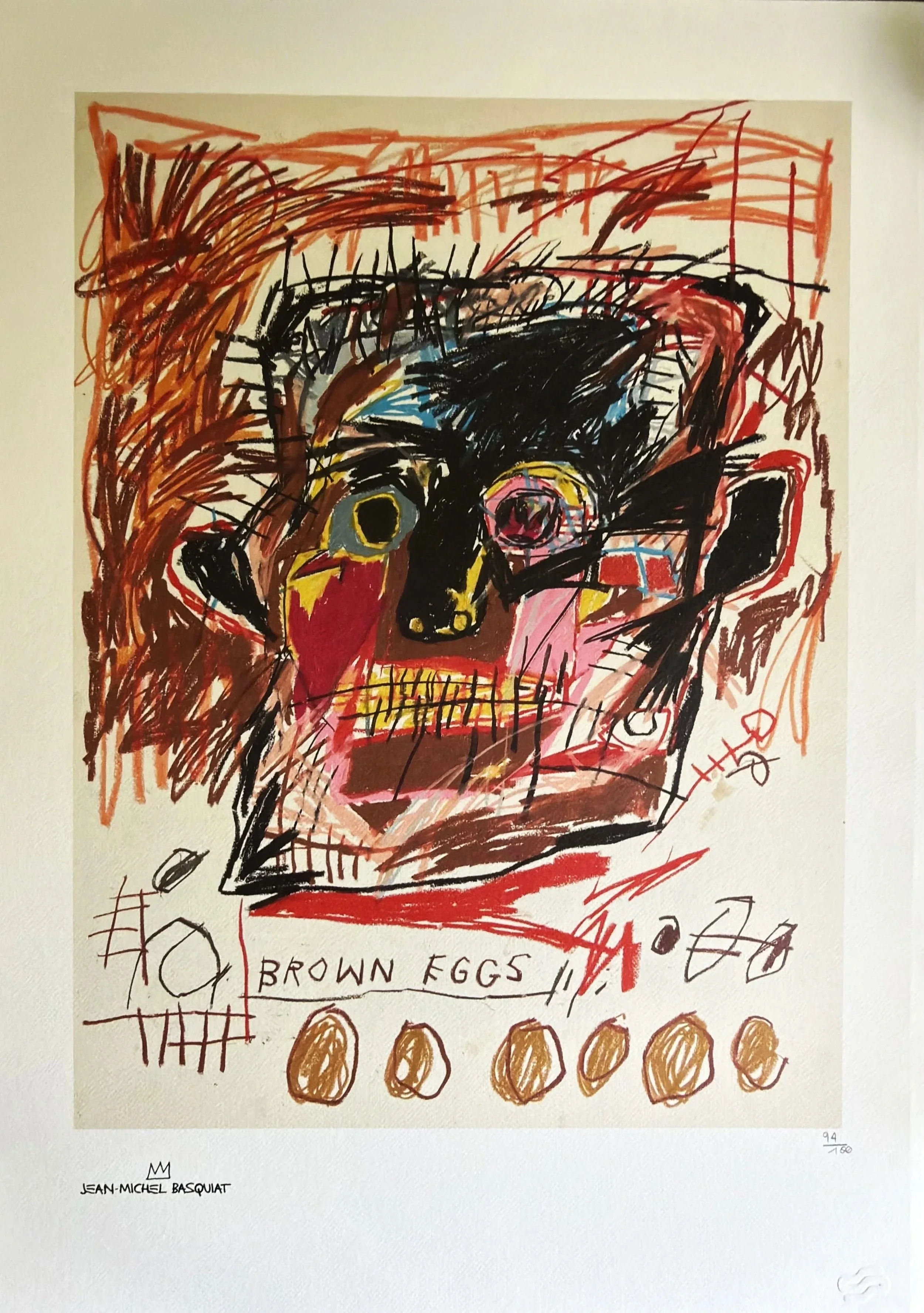 Image 2 of 5
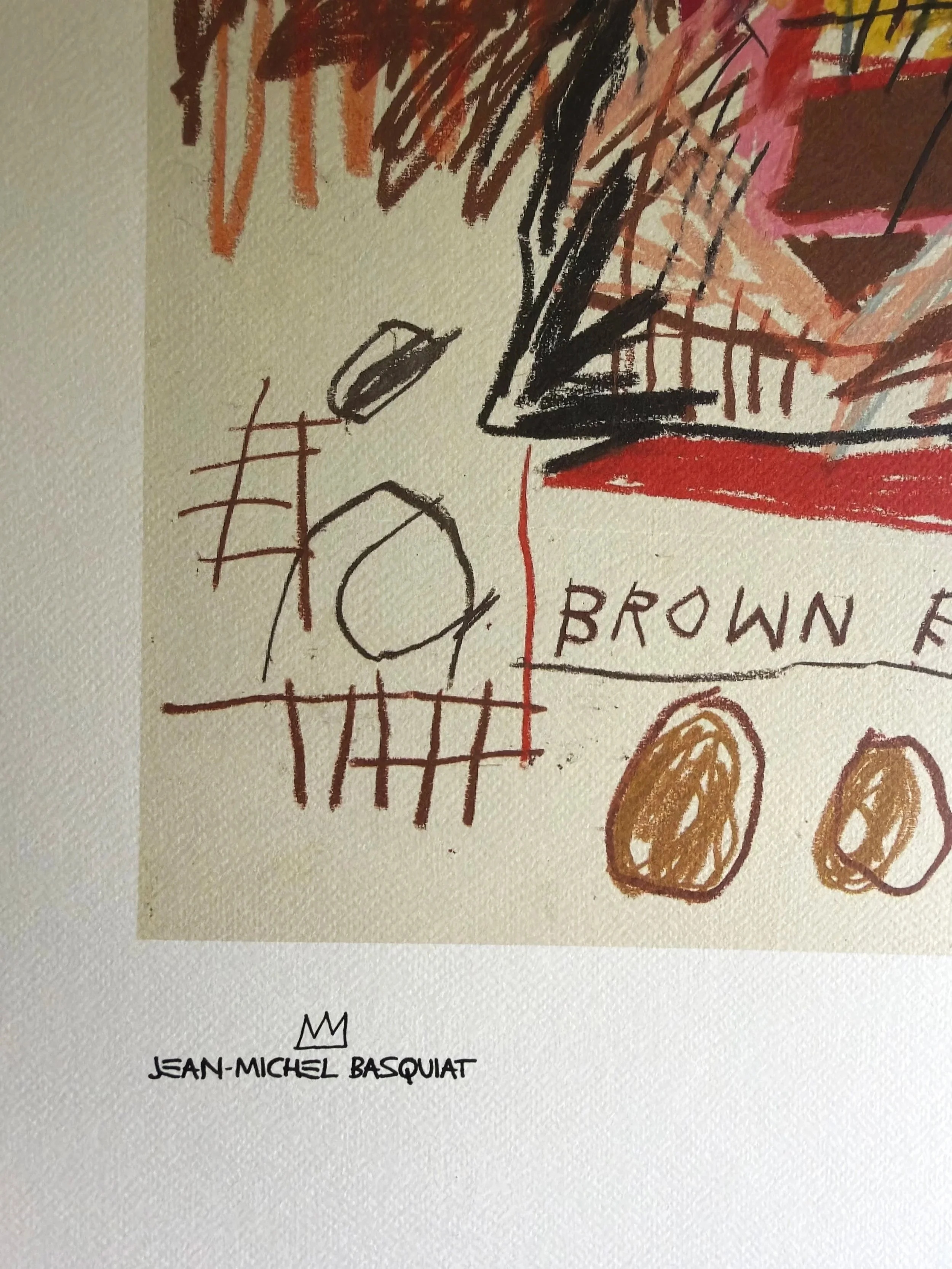 Image 3 of 5
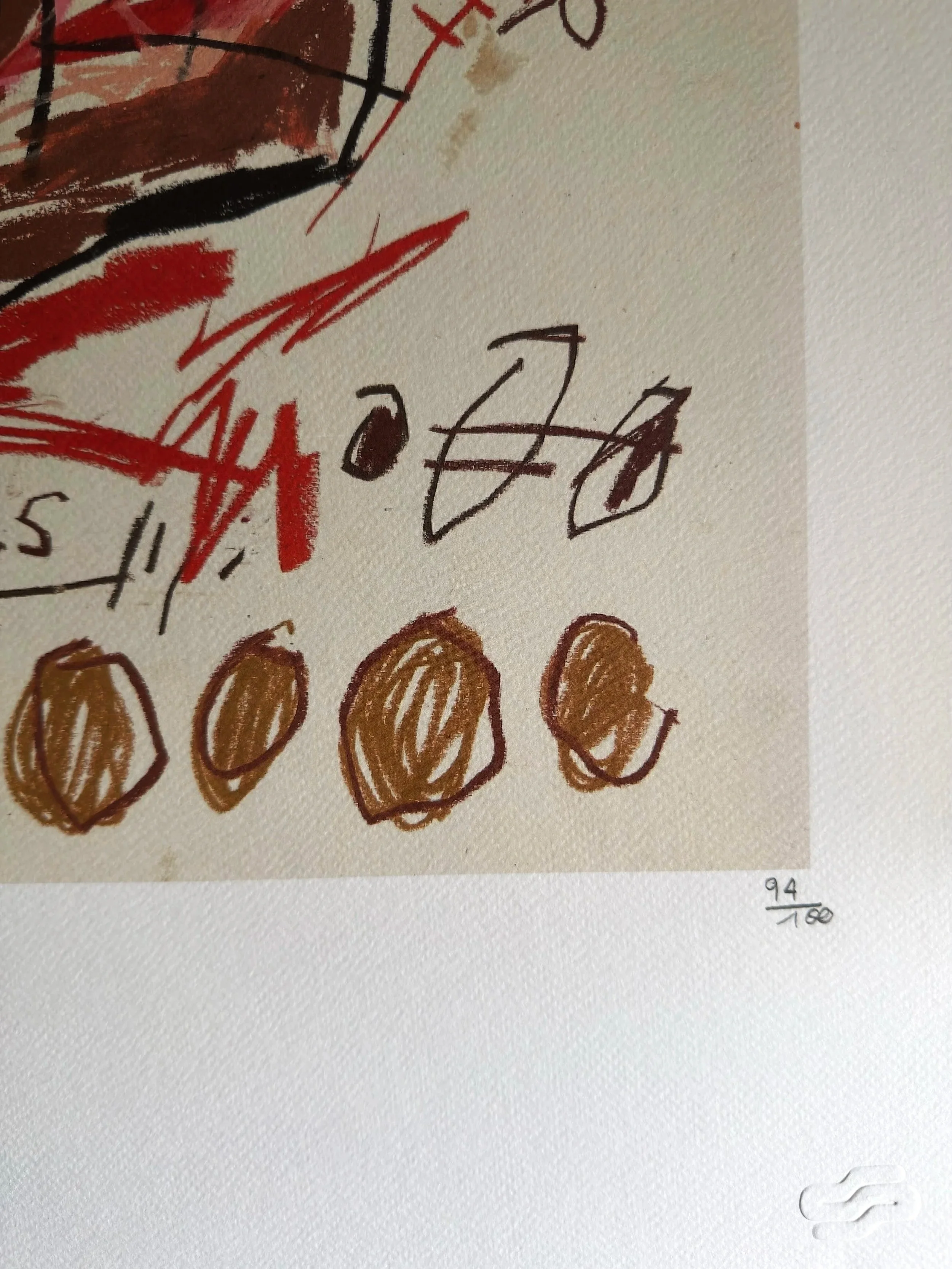 Image 4 of 5
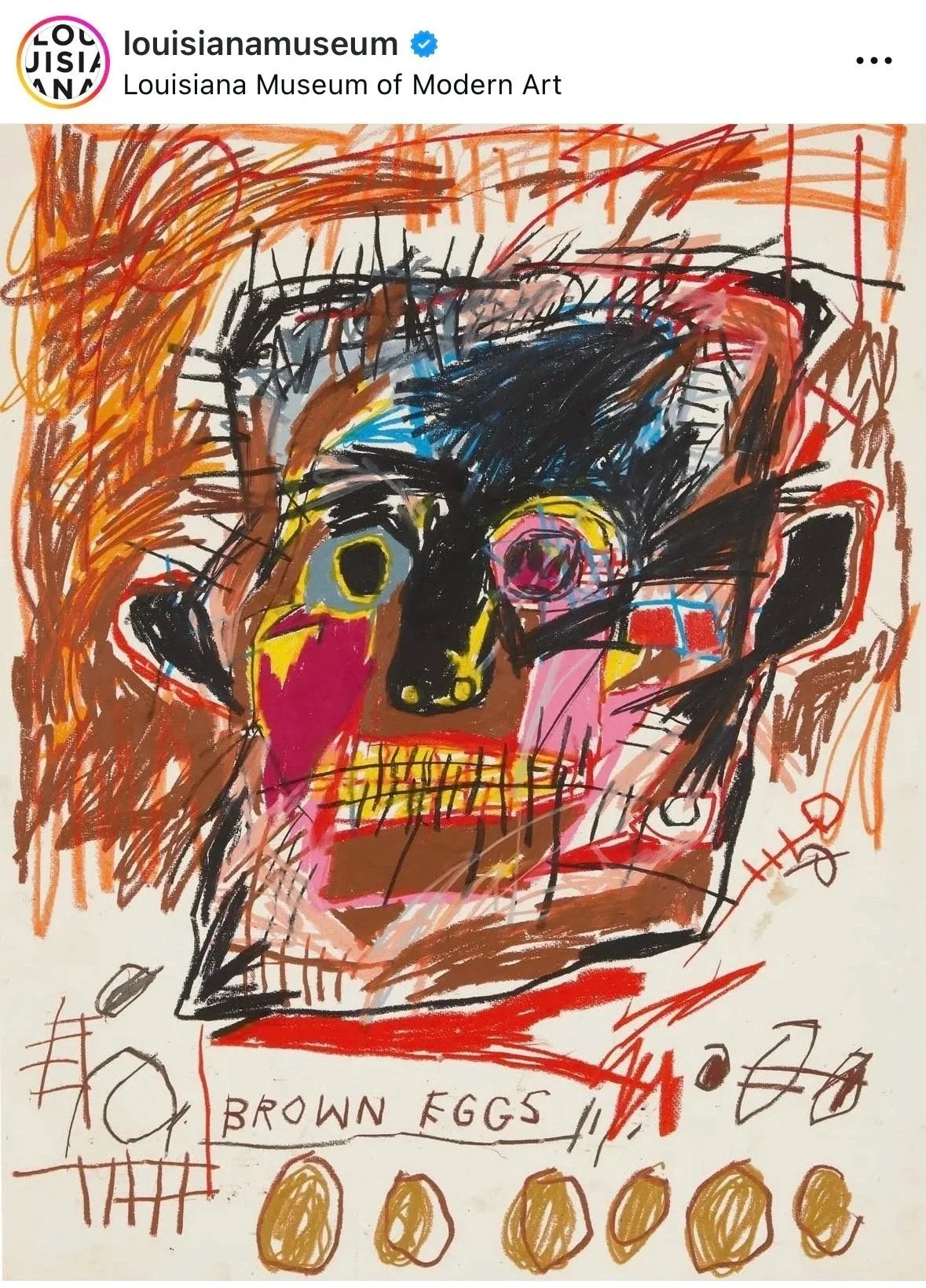 Image 5 of 5
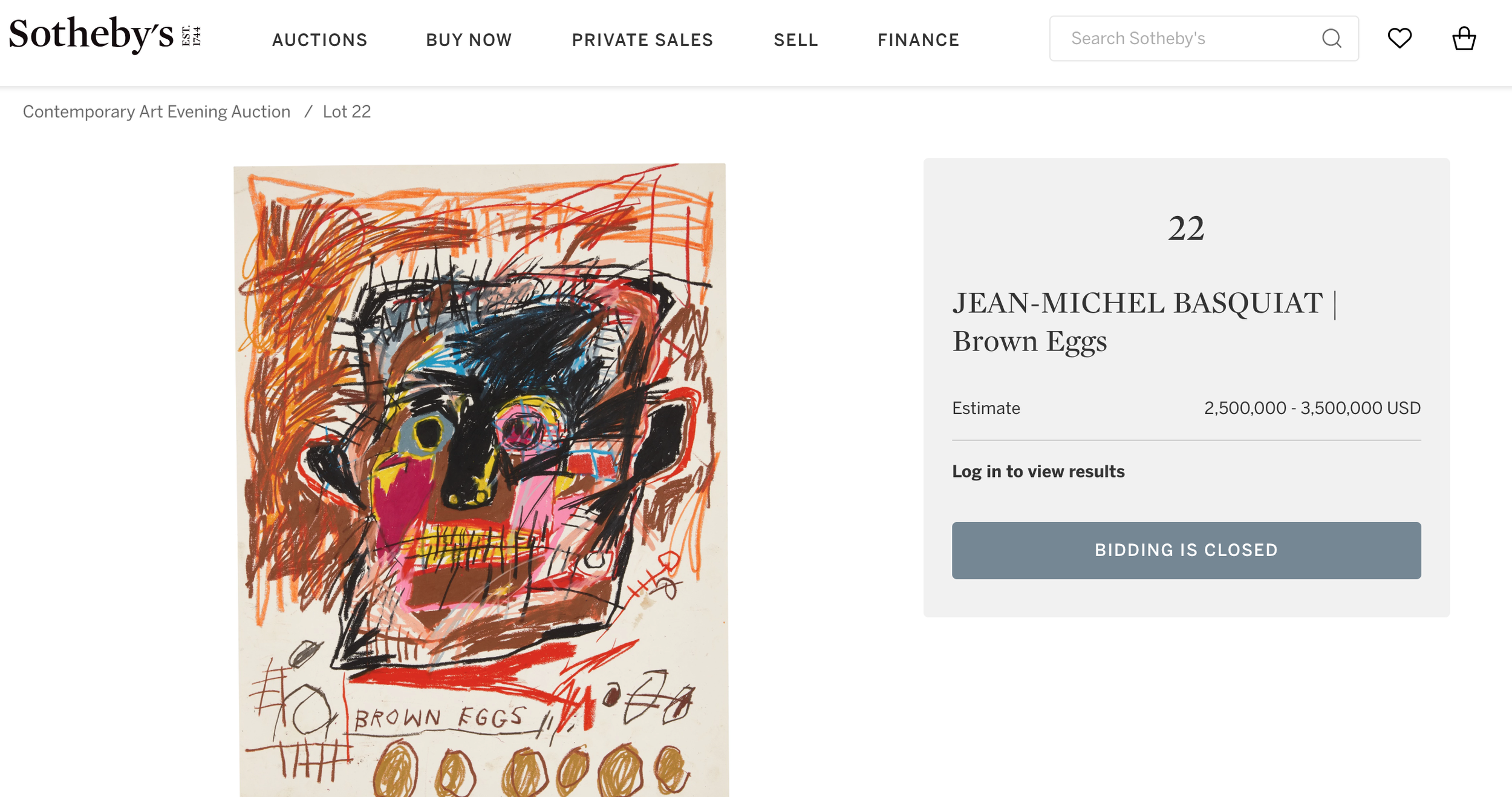
The Genesis of the Icon: From Street Tag to Masterwork
As Robert Storr profoundly noted, Basquiat’s earliest works on paper carry the "authoritative handwriting" of his street pseudonym, SAMO©. In Brown Eggs, we witness the birth of his most haunting and iconic motif: the skull-like head. This figure doesn't merely exist on the page; it "inhales and exhales" the dense atmosphere of 1980s New York. Executed in 1981, this work serves as an aesthetic premonition for his later million-dollar masterpieces, acting as a "shamanistic totem" that anchors Basquiat’s transition from the sidewalk to the sanctuary of high art.
A Sizzling Collision of Mark and Meaning
Brown Eggs is remarkable for its "saturated surface" and an exceptional diversity of mark-making. Layers of furiously scrawled hazel and orange pigment are pierced by incisions of black, scarlet, and blue, creating a "frenzied intensity" that feels barely contained by the paper’s edge. This "singularly sizzling composition" captures the young artist’s effortless genius at a pivotal moment—just as he moved into Annina Nosei’s basement studio to begin his meteoric rise to the highest echelons of the international art world.
The Enigma of 'Brown Eggs': Racial Allegory and Prophecy
While the titular scribble "BROWN EGGS" appears as a simple label, it carries the weight of a "muttered prophecy." It functions as both a racial allegory and a socio-political symbol, a theme Basquiat would later expand upon in his 1983 masterwork Eyes and Eggs. Here, the text evades clear translation, inviting the viewer into a "cryptographic manifesto" where words are inhaled through gritted teeth. It is a radical commentary on the black experience—a fusion of explosive expressionism and a charged undercurrent of systemic critique.
The Draughtsman’s Mastery
Despite his age, the Basquiat of 1981 already possessed a mature aesthetic vocabulary. The "multicolored gaze" of the figure in Brown Eggs demands recognition of his role as one of the greatest draughtsmen of the 20th century. By merging the "brut" sensibility of Jean Dubuffet with the elegance of Cy Twombly, Basquiat created a visual lexicon that remains inscrutable yet unforgettable—a testament to an "artist as prophet" who saw the world in shades of fear, gray, and ultimate brilliance.
Essential Insights: Basquiat’s 'Brown Eggs'
The 1981 Pivotal Shift: Created during the year of the New York/New Wave exhibition at MoMA P.S.1, marking his breakout into the global art scene.
The Skull Motif: A paradigmatic example of Basquiat’s primary graphic anchor—part self-portrait, part universal memento mori.
Fauvist Color Mastery: A frenetic collision of scarlet, yellow, and blue that demonstrates his instinctive command over complex palettes.
Academic Pedigree: Backed by the critical insights of Robert Storr and Marc Mayer, positioning the work within the "rarefied corpus" of his most intense early drawings.
Technical & Authentication Details
Archival Excellence: Printed on Lenox Museum Board, ensuring the "furious incisions" and "variegated strokes" of the 1981 original are preserved with 1988's master-printer precision.
The Smith Protocol: Featuring the official embossed stamp of Rupert Jasen Smith.