

 Image 1 of 4
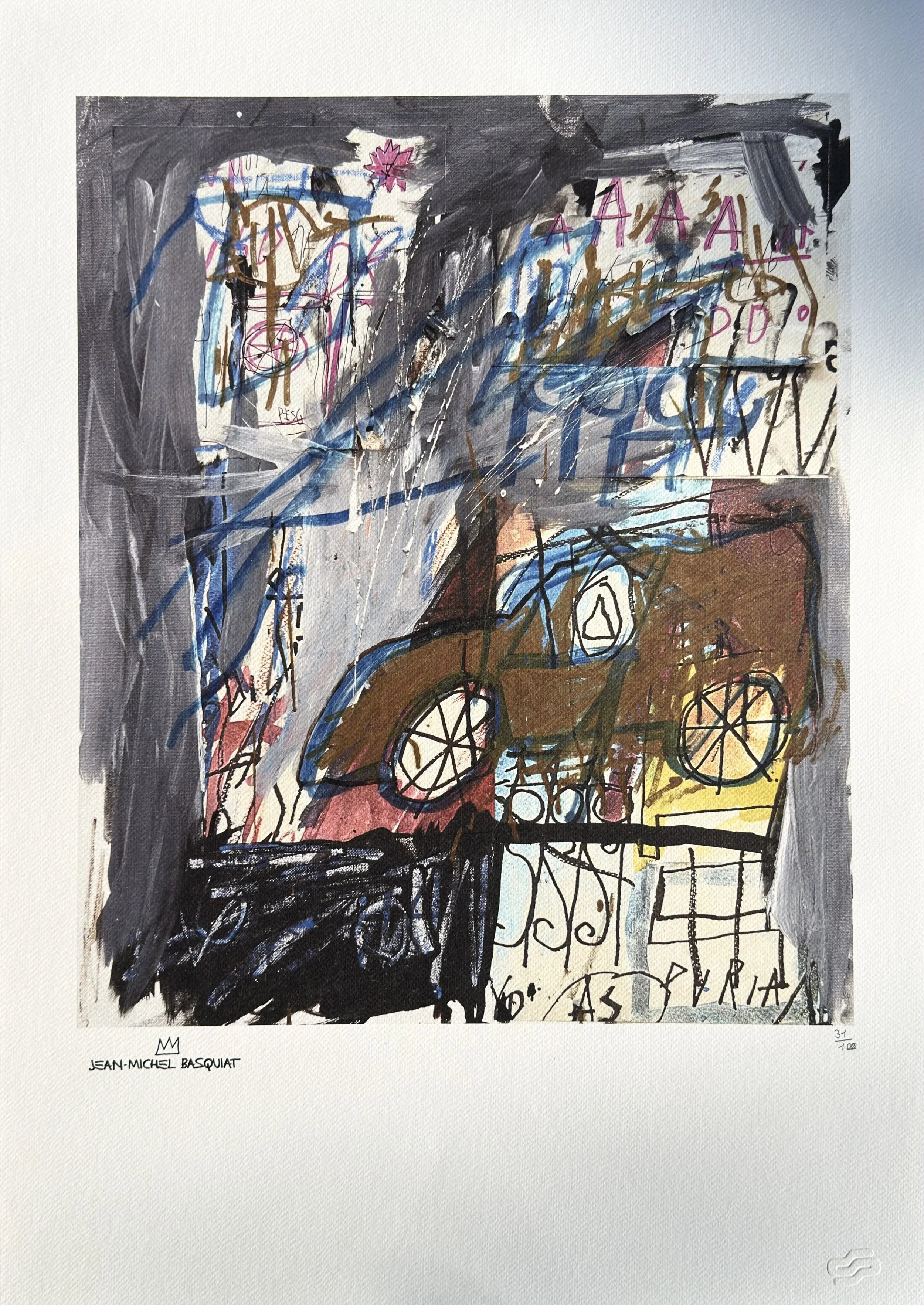 Image 2 of 4
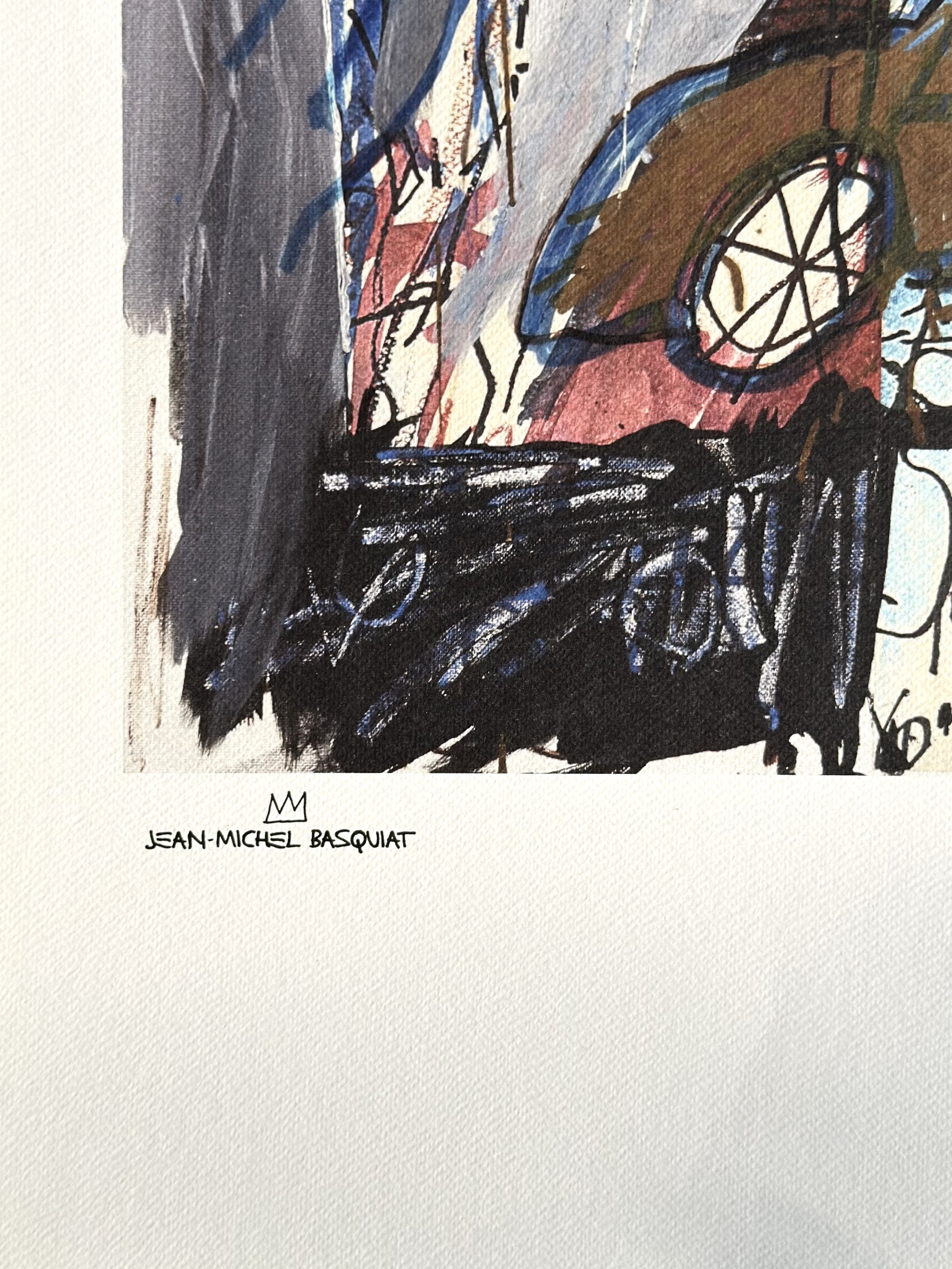 Image 3 of 4
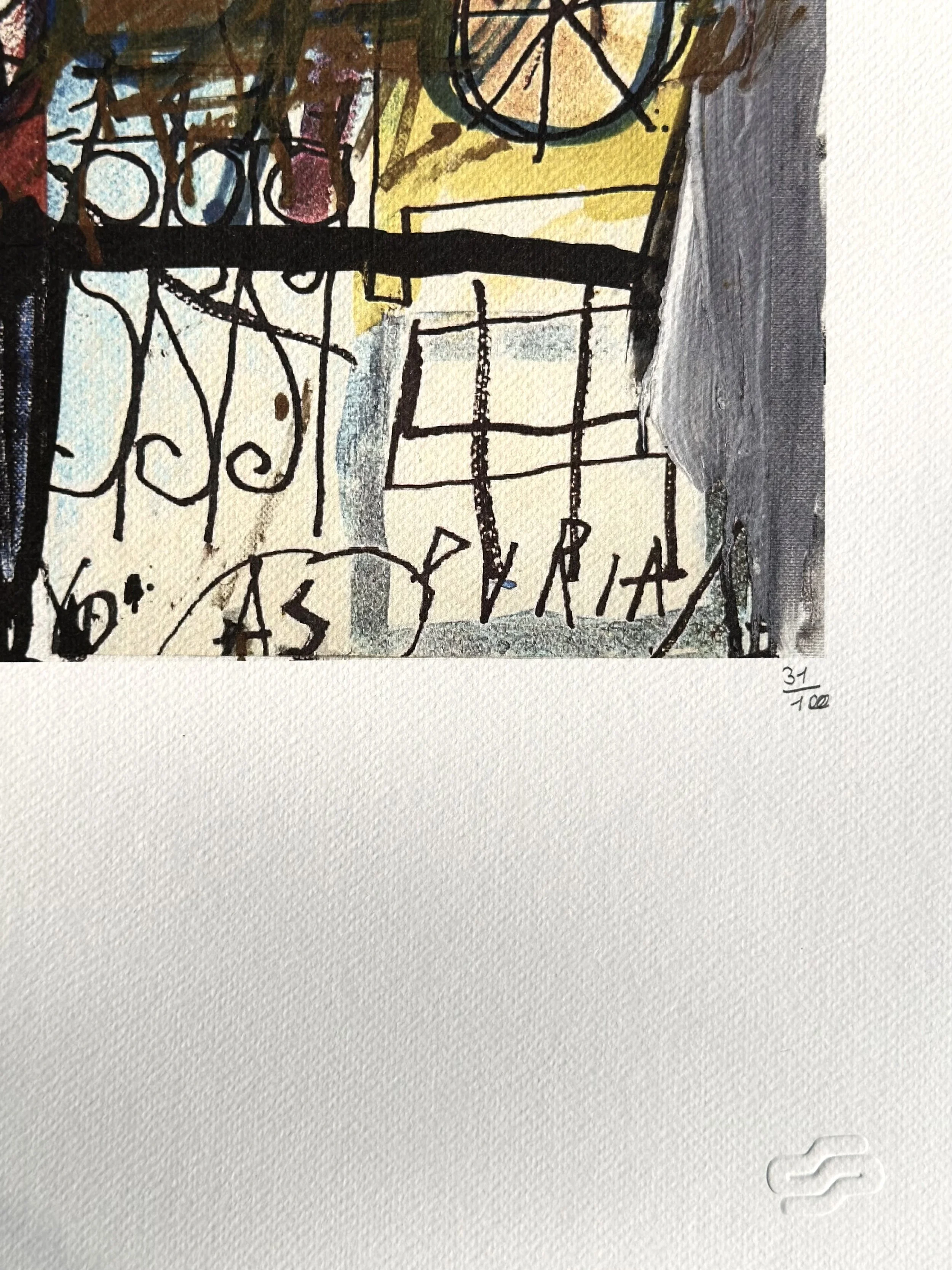 Image 4 of 4

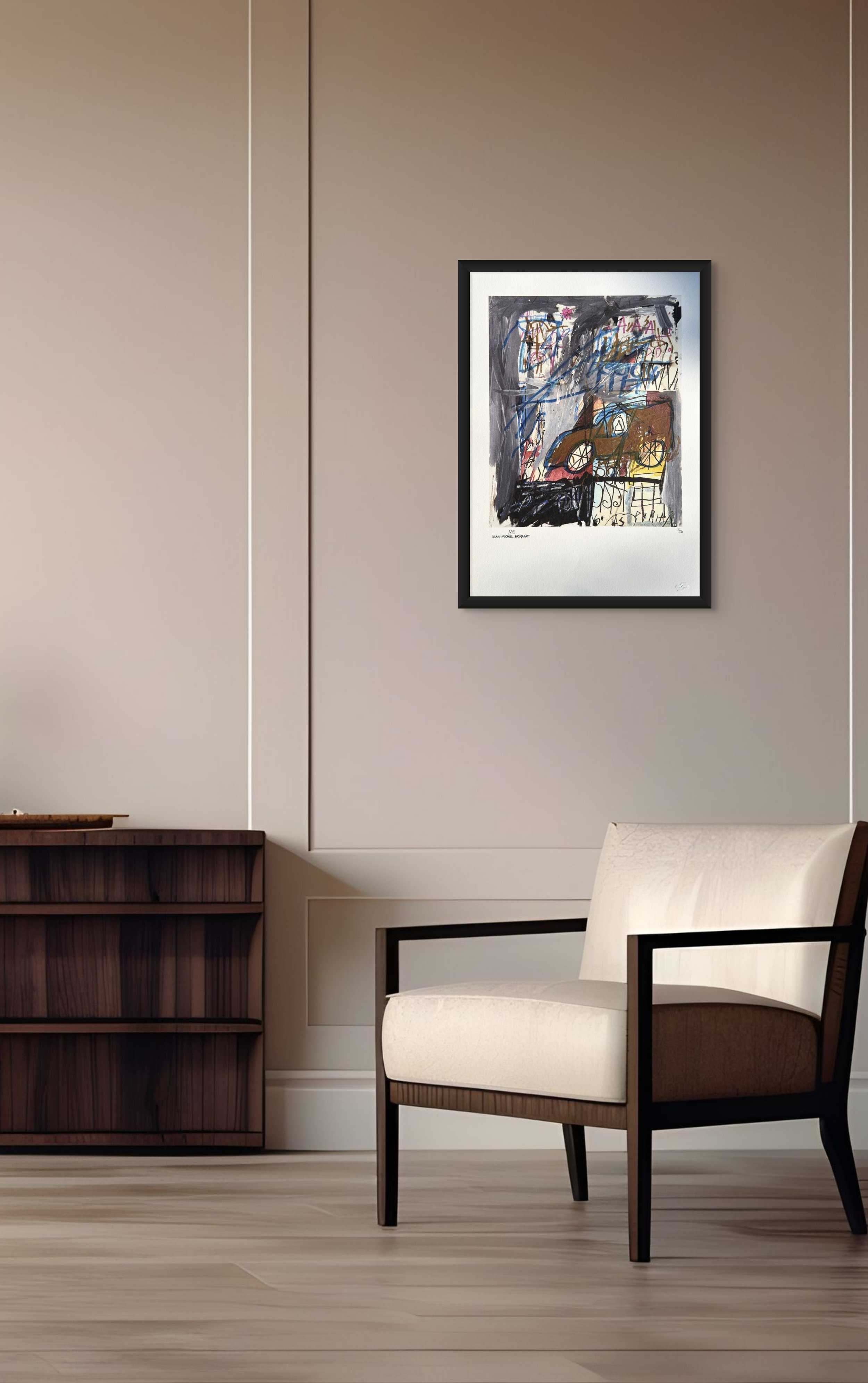
Executed in 1984, a period defining Jean-Michel Basquiat’s global dominance, Untitled (Car) is a visceral exploration of kentsel gürültü (urban noise) and movement. The original masterpiece, which has been part of significant European collections, notably appeared at Sotheby’s Milan in 2018, reinforcing its standing as a high-value asset within the contemporary art market. The work serves as a kinetic visual diary, capturing the frenetic pace of New York City through Basquiat’s unique semiotic lens.
Theoretical and Stylistic Analysis
Untitled (Car) is a masterclass in layered abstraction and spontaneous mark-making. The central araba figürü (car figure), rendered with deliberate, almost childlike urgency, is surrounded by a turbulent atmosphere of deep blue, pink, and graphite-like scrawls. Stylistically, the composition acts as a bridge between the gestural violence of Willem de Kooning and the lyrical, rhythmic lines of Cy Twombly. Basquiat utilizes the car motif not just as a machine, but as a symbol of mobility, industrial friction, and the chaotic energy of the 1980s streetscape.
Symbolism and Iconography
The work is rich with Basquiat’s signature "erasure" technique, where elements are obscured to emphasize their conceptual importance. The repetitive, overlapping lines create a sense of mechanical vibration, while the color palette—a mix of cold industrials and vibrant pops—reflects the sensory overload of the urban experience. As a "visual poem" of the street, this composition highlights Basquiat’s ability to elevate everyday objects into the realm of high-art intellectualism.
Print History and Technical Excellence
Produced under the rigorous supervision of master printer Rupert Jasen Smith on Lenox Museum Board, this 31/100 edition preserves the intricate textural details and the raw energy of the 1984 original. The vibrant fidelity of the pigments and the presence of the plate-signed signature ensure its status as a museum-grade archival piece within the Artquia Vault.