

 Image 1 of 4
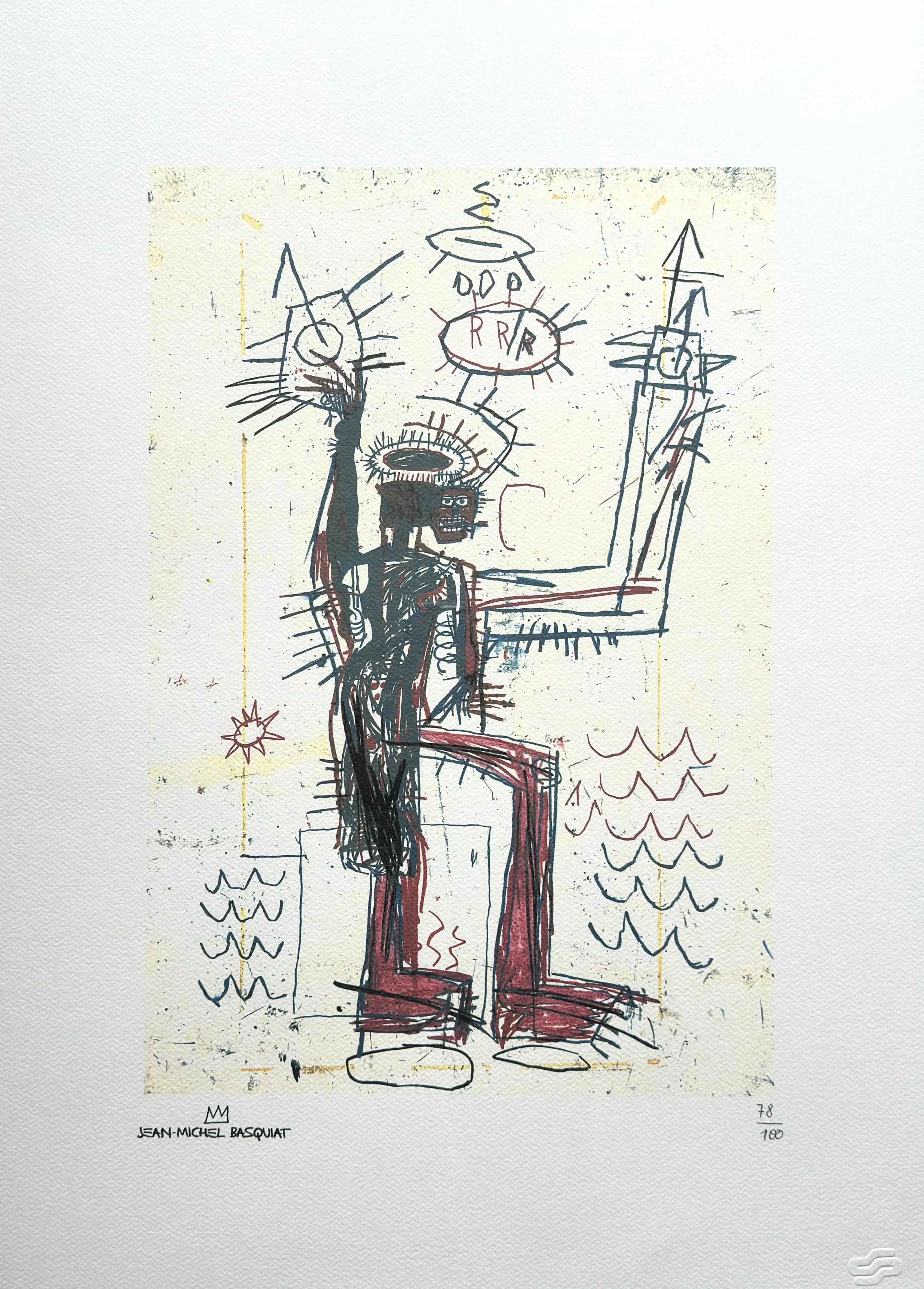 Image 2 of 4
 Image 3 of 4
 Image 4 of 4

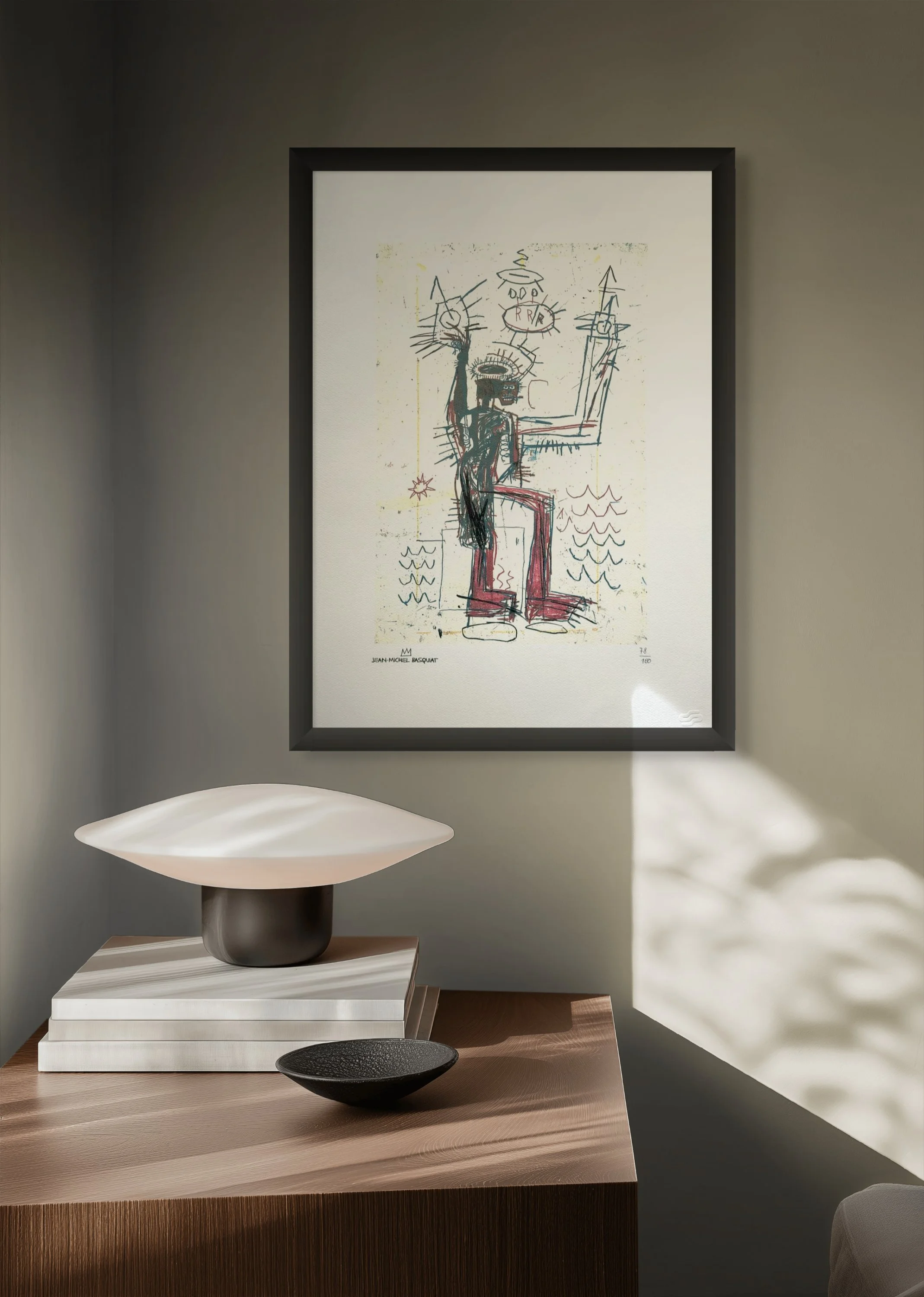
Untitled (1982) is a visceral embodiment of Jean-Michel Basquiat’s feverish energy and creative zenith, marking the definitive moment he transitioned from a street-bound provocateur to a global contemporary icon. Executed during his celebrated "key year," this work reveals an artist poised on the brink of greatness, grappling with the newfound celebrity status of his Crosby Street loft era. The heroic, full-bodied figure—with arms raised in a gesture of both surrender and triumph, and teeth bared in a primal scream—serves as an iconic emblem of the saints, heroes, and martyrs that populate Basquiat’s complex oeuvre. Recognized early for its immense significance and featured in the prestigious 1990 survey at the Robert Miller Gallery, this composition captures the "guns-blazing" defiance of an artist who fearlessly inserted himself into a pantheon of legendary black icons, from the frantic bebop of Charlie Parker to the heavy-hitting resilience of Joe Louis.
Theoretical and Stylistic Analysis
This work showcases Basquiat’s celebrated skills as a virtuoso draftsman, seamlessly merging the formal aspects of Egyptian hieroglyphics with the stark, anatomical precision of Grey’s Anatomy. The figure is presented as a hulking mass rendered through dual viewpoints—a nod to Cubist influence filtered through a Neo-Expressionist lens—with flesh that alternates between light-blue, pale-pink, and blood-red, all vibrating over a dark skeletal framework. A critical, close inspection reveals sophisticated layers of "superposition and erasure"; an intriguing underlayer of light-blue suggests an initial depiction of the Statue of Liberty in New York Harbor—a symbol of a "promised land" that Basquiat, in a stroke of genius, eventually transformed into his own self-image.
The repetition of the letter "R" inside a crown of thorns—referencing a registered trademark—reflects his profound obsession with the commodification of fame and the ownership of his own identity. Furthermore, the halo-like forms positioned beneath the figure’s feet allude to the biblical miracle of Christ walking on water, elevating the subject from a mortal man to a divine entity. Ultimately, the work stands as a monumental self-portrait of a "powerful black warrior" and a defiant god, standing up against the systemic forces of a predominantly white art world, refusing to go down without a fight.