

 Image 1 of 5
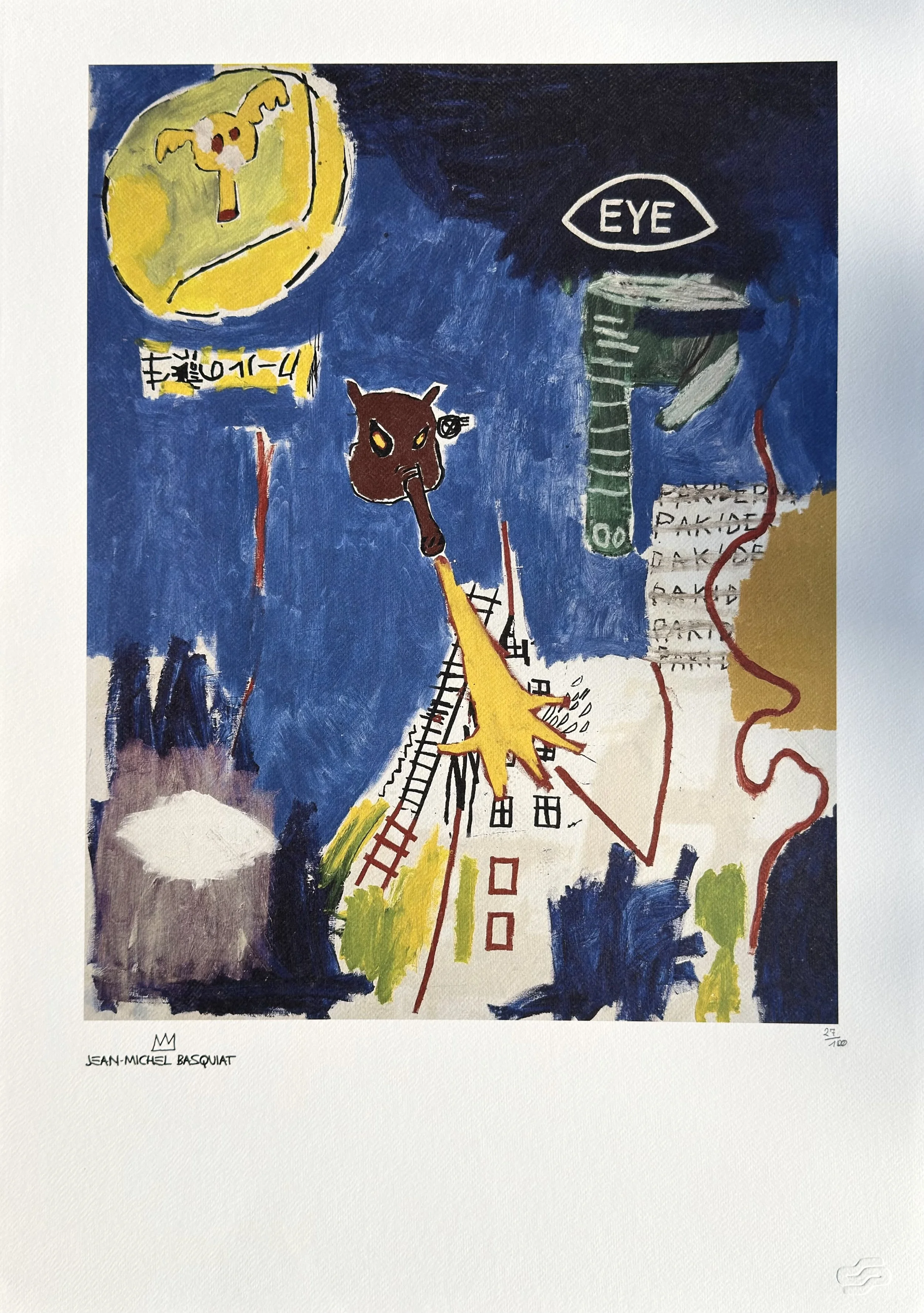 Image 2 of 5
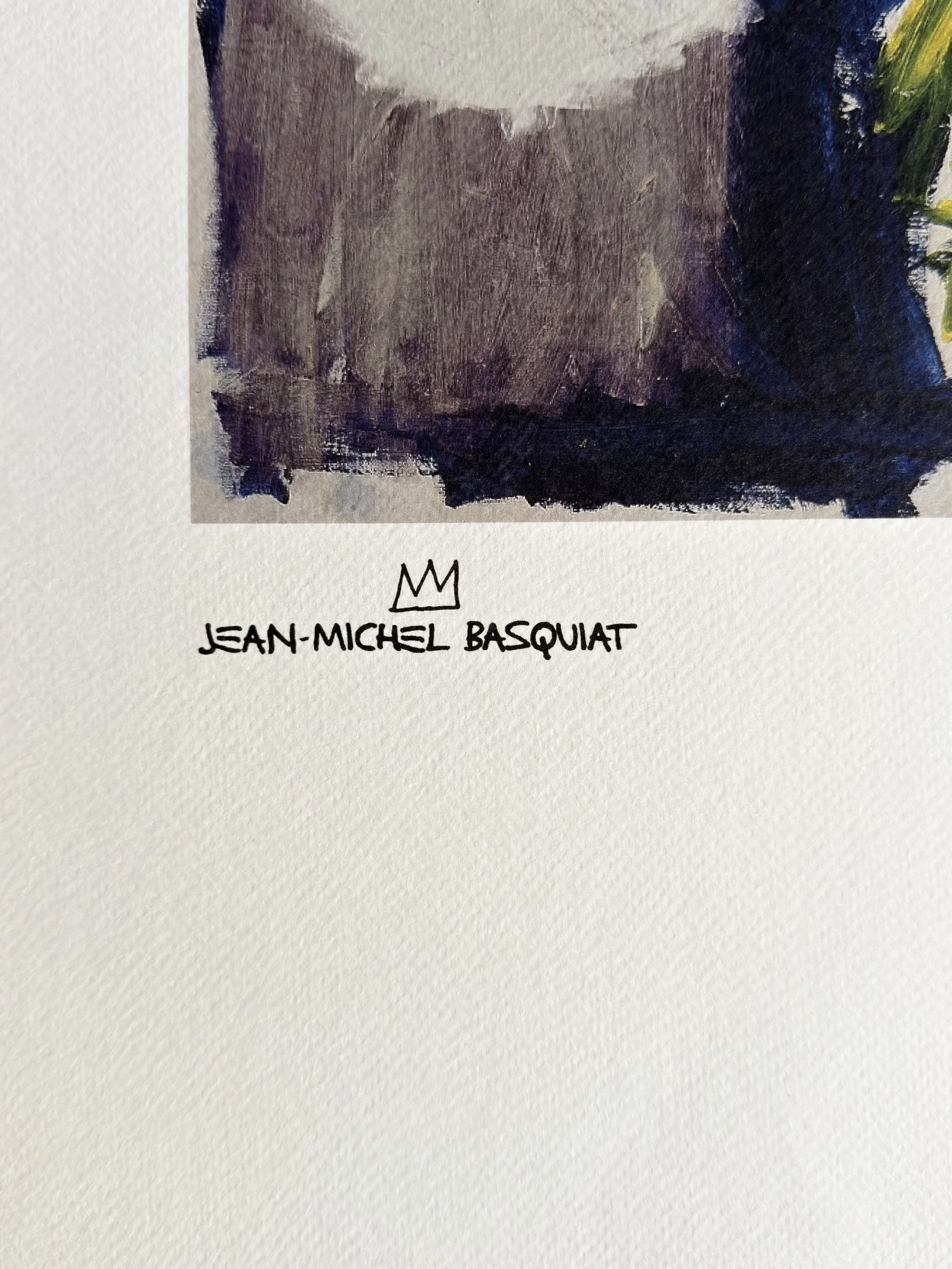 Image 3 of 5
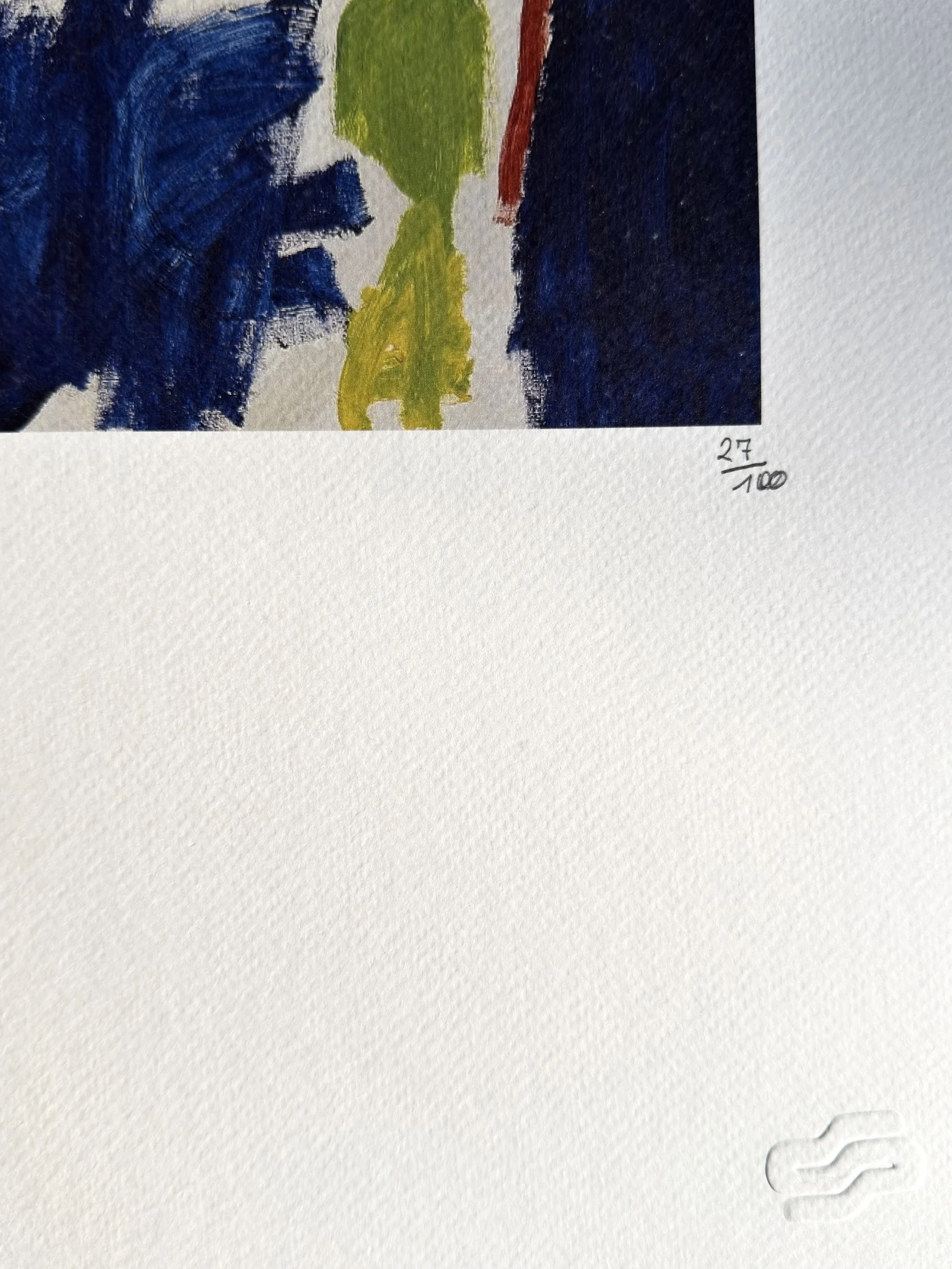 Image 4 of 5
 Image 5 of 5

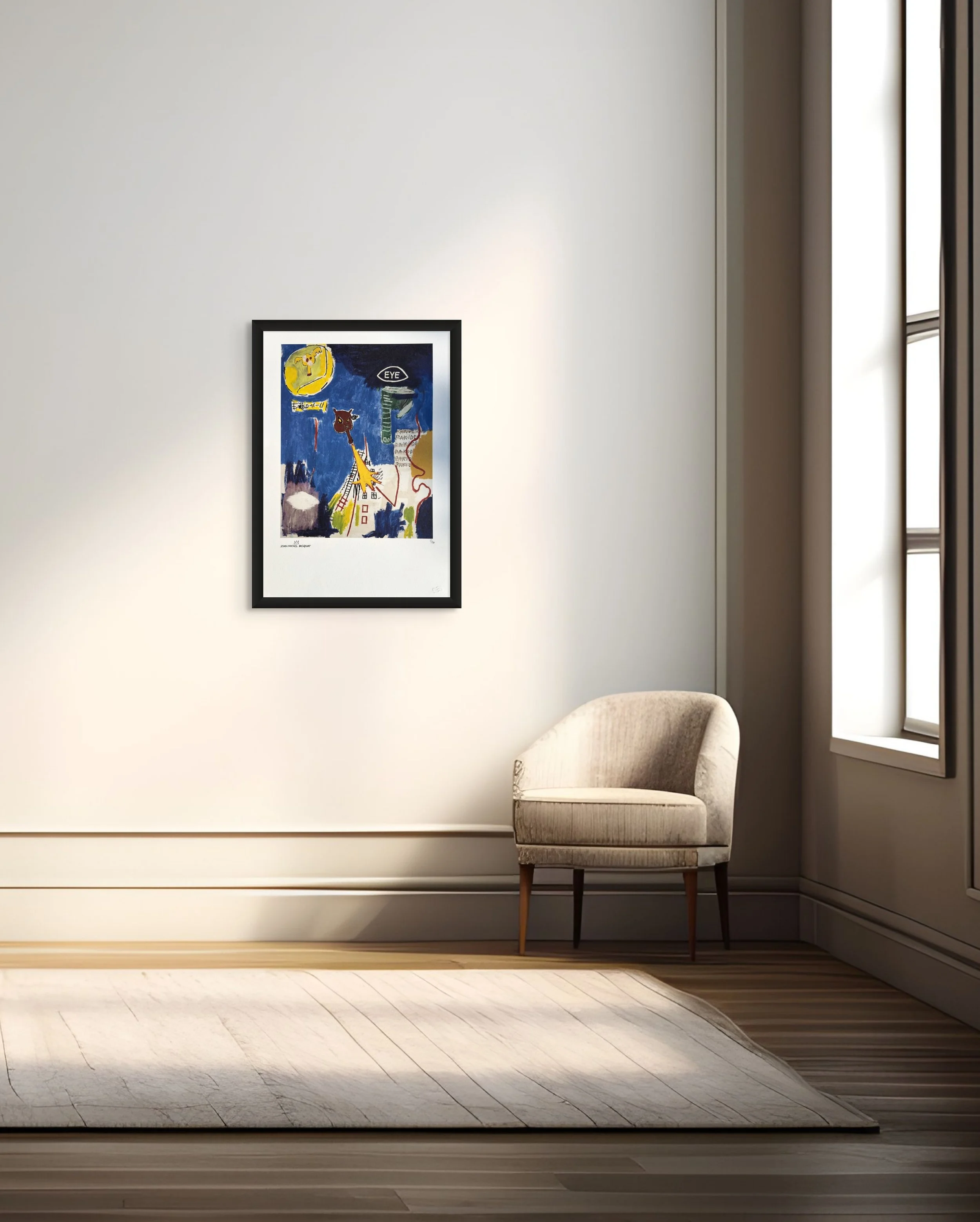
Executed in 1983, a pivotal year when Jean-Michel Basquiat’s visual lexicon was expanding into more complex territories, Pakiderm serves as a brilliant example of his fascination with linguistic weight and physical presence. The original work is a distinguished part of the Eli and Edythe Broad Collection, one of the world's most significant repositories of Basquiat’s oeuvre, and has a documented history of high-profile appearances at Sotheby’s. The title—phonetically referencing the "thick-skinned" nature of large mammals—acts as a metaphor for the psychological and social armor required within the high-pressure New York art scene of the 1980s.
Theoretical and Stylistic Analysis
Pakiderm is characterized by a sophisticated interplay of grayscale tones, interrupted by urgent flashes of primary colors and skeletal outlines. The composition echoes the anatomical diagrams of Gray’s Anatomy, a foundational influence on Basquiat’s work since childhood. Stylistically, it bridges the gap between the intellectual graffiti of his SAMO© period and the monumental neo-expressionist paintings of his mature years. The work showcases a mastery of "erasure"—the crossing out of elements to make them more visible—a technique that draws the viewer’s eye to the labor and instinctual decisions behind every mark.
Symbolism and Iconography
The imagery in Pakiderm functions as a visual poem, combining symbols of structural strength with those of inherent vulnerability. The presence of crowns, skeletal ribcages, and industrial scribbles suggests a subtle critique of power structures and the commodification of the human experience. Similar to the works of Cy Twombly, the linework here is rhythmic and lyrical, yet it remains anchored in the gritty reality of urban life. The "thickness" suggested by the title is visually translated through the dense layering of pigments, creating a surface that feels as resilient as it is expressive.
Print History and Technical Excellence
Produced under the rigorous supervision of master printer Rupert Jasen Smith on Lenox Museum Board, this 27/100 edition preserves the intricate textural details and the raw, graphite-like quality of the 1983 original. The vibrant fidelity of the pigments and the presence of the plate-signed signature ensure its status as a museum-grade archival piece within the Artquia Vault.