

 Image 1 of 4
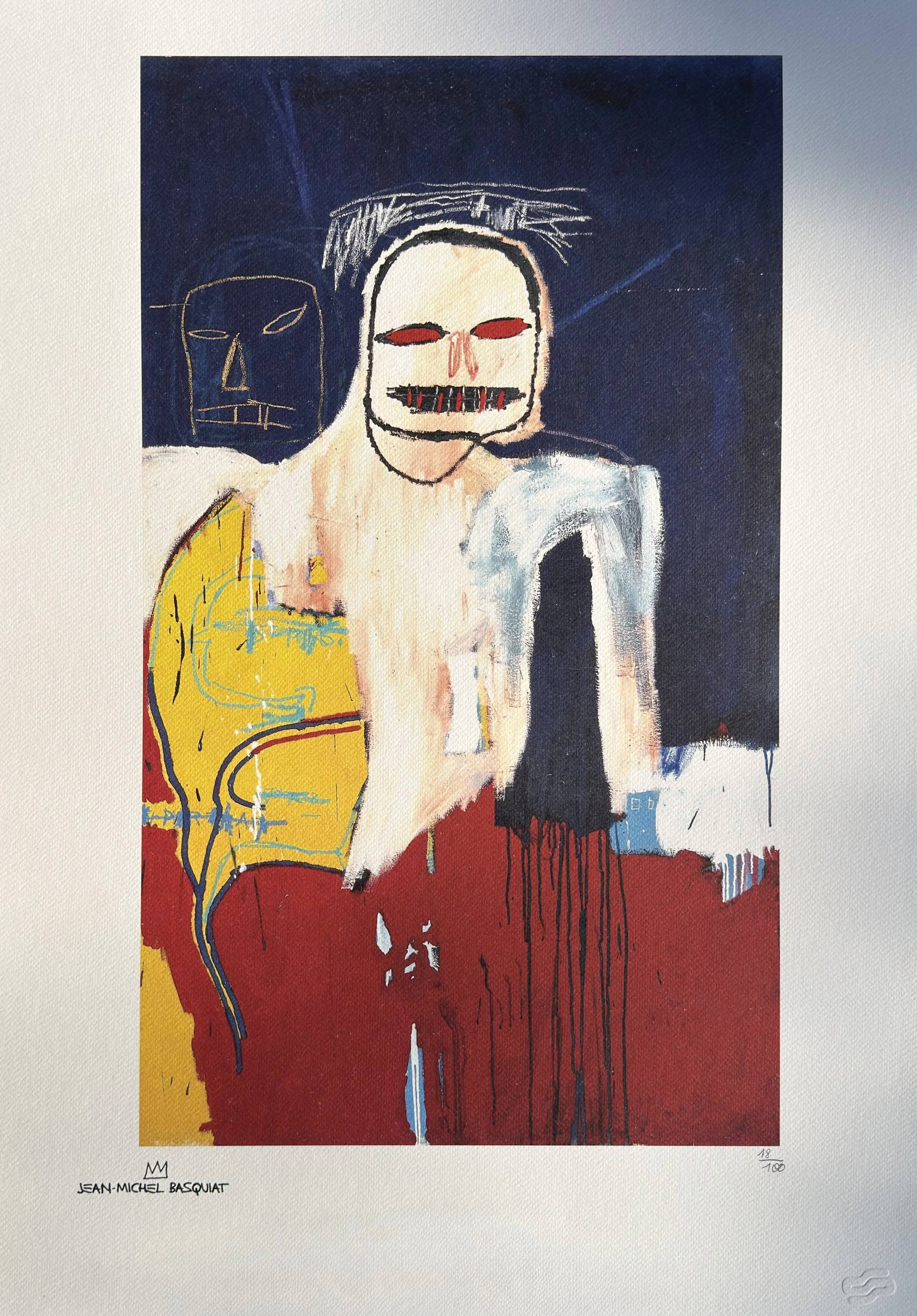 Image 2 of 4
 Image 3 of 4
 Image 4 of 4

Painted in 1983, when Basquiat was at the peak of his artistic powers at only 23, Head and Scapula is doubtless one of the most emblematic and captivating works the artist ever made. Formerly a centerpiece of the prestigious Alain & Candice Fraiberger Collection, this work vibrates with the intensity and energy associated with the greatest geniuses in art history. As a leader of the Neo-Expressionist movement, Basquiat introduced an irreversible break from minimal and conceptual art, establishing a "second pictorial reality" based on the unconscious—the wild and vital force that Freud called "Id".
Theoretical and Stylistic Analysis: Head and Scapula masterfully illustrates Basquiat's sophisticated method of superposition and erasure. The composition presents a half-bust portrait in three-quarter profile with an almost classical purity of gesture, achieving a presence not seen in art since Schiele and Matisse. Basquiat’s technique of layering paint only to later cover or partially erase it creates a hypnotic alternation between transparency and disappearance. This stylistic method allowed him to merge images from the street, television, and his Haitian spiritual legacy with an intuitive understanding of language and modern painting.
Cultural Identity and Iconography: The work is a profound examination of the artist’s realization of his Black and Hispanic identity. By combining sacred voodoo mythology with the Bible, advertisements, and Afro-American musical heroes, Basquiat expresses a universe that is as vast as it is enigmatic. All of Basquiat's work is summarized in this painting: the vibrant red outlines, the hieratic pout, the skeletal anatomy, and the recurring themes of mortality and cultural resilience.